


Filed under: Uncategorized | Tags: cornucopianism, doom porn, energy, Kunstler, peak oil, technology
Kunstler is always a fun read. Well-informed too. But he is a glass-half-empty kind of guy.
He’s got a new one coming out, apparently calling us out for our magical thinking about ‘technology,’ which is a good idea.

And there’s an interview on DisinfoCast here: http://www.disinfo.com/2012/04/too-much-magic-with-james-howard-kunstler-the-disinfocast-with-matt-staggs-episode-07/
Filed under: Uncategorized | Tags: Brent, energy demand, North Sea, oil consumption, oil demand, oil price predictions, peak oil, the breaking point, US oil demand
Via Stuart Staniford’s Early Warning:
http://earlywarn.blogspot.com/2012/04/us-oil-consumption-and-oil-prices.html

However, it’s also worth noting that the price required to make consumption decline has increased over time. In 2006-2007, prices of around $70 were enough to make oil consumption flatten and then decline. However, in late 2009 and 2010, similar prices obtained while consumption continued to rise. It took the rise to over $100 in spring 2011 to get consumption to start to decline again.
Filed under: Uncategorized | Tags: crude oil, EIA, energy, Iran oil production, Iraq, middle-east, oil production, oil supply, peak oil, Peak Oil is dead, pipeline problems, Turkey
A new fire in the North Sea; blowout in Russia; hacking in Iran; pipeline problems in Turkey; accelerated violence in South Sudan… What I miss?
Filed under: Uncategorized | Tags: 7 sisters, de Margerie, energy, IEA forecast for 2012, Jon Thompson, Lee Raymond, oil demand, oil production, Peak Demand, peak oil, Total, XOM, Yergin
Interesting piece by Andrew McKillop.
At the current time there is no sign that either of these Nice Theory solutions coming about in the real world, unless we try the conspiracy theory that the OECD group, led by the US, Europe and Japan voluntarily sabotaged their economies in 2008 – to save oil !
Annual growth of oil demand by China, India, Bangladesh, Pakistan, Brazil, Turkey and other nonOECD, large population, oil importing industrialising countries could hit as much as 1.75 Mbd each year, under 2004-2007 global economic conditions. Not even 2 years of that growth would send oil prices right off the top of the graph. Even with continued slow oil demand growth by the OECD group, or recession-driven decline of their demand … global oil demand can easily bounce.
…
We can simply note that dependable Peak Oil denial from playful flyweights like Dan Yergin or oil industry stalwarts like former CEO Lee Raymond and E&P chief Jon Thompson of ExxonMobil, or Christophe de Margerie of Total has problems staying on track. The real bottom line on global oil production is increasingly heard: world oil output will very likely never achieve more than around 90 Mbd on a short-life basis, before terminal decline sets into operation. The only upside is that necessarily more expensive shale oil, and necessarily expensive GTL (oil from gas) may smooth the downslope.
Today’s IEA forecast for global average daily demand in 2012 is about 89.9 Mbd.
via The Magical Decline Of Crude Oil Demand :: The Market Oracle
Filed under: Uncategorized | Tags: denial, economics, energy, joules, Peak Demand, peak oil, physics, thermal energy, Tom Murphy, waste heat
Or, My Dinner With Andre the Giant Economist.
Another fun bit from Tom Murphy. Shades of Plato’s Republic.
…The upshot is that at a 2.3% growth rate (conveniently chosen to represent a 10× increase every century), we would reach boiling temperature in about 400 years. [Pained expression from economist.]
via Exponential Economist Meets Finite Physicist | Do the Math.
The economist says he believes that energy will become “arbitrarily cheap” in the future, before realizing how stupid that is.
Filed under: Uncategorized | Tags: Citi, Citigroup, energy, fracking, hydraulic fracturing, oil price predictions, oil supply, oil supply predictions, peak oil
Citi analysts have been calling an end to America’s energy problems and for the appearance of a 900-foot-tall golden unicorn named Darren.

Filed under: Uncategorized | Tags: Ali Naimi, energy, James Hamilton, oil consumption, oil demand, oil production, peak oil
“There is no rational reason for high oil prices,” writes Ali Naimi, Saudi Arabian Minister of Petroleum and Mineral Resources, in today’s Financial Times. Well, I can think of one– if oil prices were lower, the world would want to consume more than is currently being produced.
via Econbrowser: A rational reason for high oil prices.
Filed under: Uncategorized | Tags: depletion, energy, England, North Sea, oil depletion, oil production, oil production declines, oil supply, peak oil, UK, UK oil production
For any modern nation, a 22% decline in oil production would be significant over the course of a decade. A 22% drop over a mere 12 months ought to be front-page news, yet this radical decline has passed relatively unnoticed.
via UK Oil: Plummeting production vs media inattention | Energy Bulletin.

Filed under: Uncategorized | Tags: Bakken, Daniel Yergin, depletion, EIA, IHS CERA, Iran, Iran sanctions, oil predictions, oil supply, oil supply predicitons, peak oil, shale oil, The Yergin Gap, tight oil
Everything Yergin says here is true. He gives the impression of someone who chooses his words carefully. He won a Pulitzer and wrote two giant books about oil. But he somehow always leaves out half the story. Just doesn’t get it or pretends it doesn’t exist.
Yergin is a self-described optimist who believes human ingenuity (and higher prices) will produce as much oil as mankind would ever want or need. Like many of his ilk, he emphasizes various sources of supply that are on the verge of coming on line, and new sources of supply like the Bakken that are adding to existing supply. He mentions “disruptions” in supply, and indeed there are many of those. Disruptions are always on the verge of being restored to their rightful levels, you see. What he and his cornucopian brethren never mention is the ongoing natural depletion of existing giant oil fields. And his predictions never seem to take this depletion into account — which means his predictions (and those of his firm IHS CERA) have been absolutely laughable. I mean, they will make you lol those old predictions. The existing world of oil makes a lot more sense if you take into account the phenomenon of depletion; unfortunately the future looks a lot more bleak.
“Pulitzer Prize-winning Daniel Yergin” gets trotted out repeatedly, because his blind spot on depletion is quite useful to the contingent that thrives on the false belief that excessive regulation is throttling production in the US. And there is oh so much cash behind that fakery. Yergin’s paycheck depends on his not acknowledging depletion. The whole circus is really quite shameful, isn’t it?
Here he is in the WSJ optimistically listing factors that could keep the price of oil down, counteracting tensions with Iran. Optimism! Let’s see: New supply in the US, and various potential new sources of supply around the world. Check. Also, reductions in demand. Check. He doesn’t mention that “new supply” would have to amount to a Saudi Arabia’s worth every few years just to make up for ongoing depletion. In fact, he doesn’t mention depletion at all. Well done, Daniel.
New petroleum supplies could come into the market over the year from a variety of sources—from Iraq and Angola to Libya and Colombia. And notably, 300,000 barrels per day or more from the United States—primarily from North Dakota and Texas and from a rebound in off-shore production.
The other offset could come from reductions in demand. U.S. gasoline consumption so far this year is down over last year. China’s new economic growth target of 7.5%—down significantly from the 10% or so of recent years—would mean lower growth in its petroleum consumption. Of course, a rebound in global economic growth would increase demand, not only in China but in the U.S., Japan and Europe.
via Daniel Yergin: What's Behind Rising Gas Prices? – WSJ.com.
Filed under: Uncategorized | Tags: crude oil, oil production, oil supply, peak oil, Saudi Arabia, Saudi Arabian oil production, Schumer
But Senator — to what degree will desperate-sounding ‘comments’ from US officials like yourself counteract those hypothetical emphatic promises? Seems like Shoom is scrambling for relevance.
Schumer called on Saudi Arabia to repeat its intention to make up for supply losses, arguing the comments will drive down gas prices, which are tethered to global oil prices.
“If the markets believe this is real, the price will come down even further. So we are asking the Saudis to repeat this promise,” Schumer said.
“The more explicit they are, the more emphatic they are, the more they ensure the markets that they are for real here,” he continued, “the more the markets will calm down more permanently and the more the price will come down.”
via Schumer: Saudi Arabia's plan to increase oil supply will lower gas prices – The Hill's E2-Wire.
Filed under: Uncategorized | Tags: Asian oil demand, Chindia, Chris Nelder, demand destruction, efficiency, energy, fat gets trimmed, fuel efficiency, global oil consumption, OECD, peak oil, transportation
Chris Nelder explains a critical dilemma facing American consumers. As total available oil exports decrease (at a rate that would bring them to absolute zero in about four years), inefficient westerners will be outbid by the new Asian “middle class” for these diminishing supplies.
Of course, exports can fall to zero in theory only, not in practice. In reality, high prices will kill the most inefficient, unsubsidized demand first—in the U.S. and Europe. Next, demand will be curbed in net exporting countries, first via the removal of domestic fuel subsidies, and then by world prices. The demand of the four billion people in Asia will be the last to go because they use it most efficiently.
via Oil demand shift: Asia takes over | SmartPlanet.
Translation: The fat gets trimmed. The fat is here.
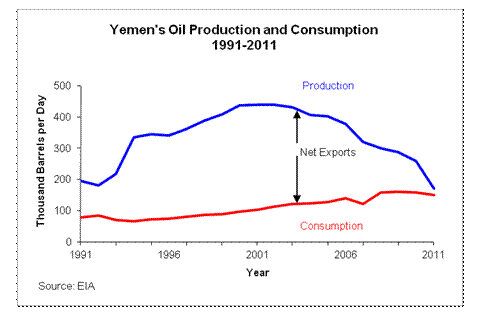
Filed under: Uncategorized | Tags: energy, net available exports, oil consumption, oil exports, oil production, peak oil, Yemen
Via the EIA’s Yemen page, which seems to rely heavily on Oil & Gas Journal.
Filed under: Uncategorized | Tags: Big Gas, Big Oil, Boone Pickens, Club for Growth, energy, frack, fracking, Koch Brother, Natural gas, peak oil, Peak Oil is dead, s
Kochs don’t like govt. picking winners and losers — especially if the losers are them.
The idea of using the tax code to spur conversion of trucking fleets has support from many Democrats and Republicans, and enjoys some powerful backers.
They include billionaire energy magnate T. Boone Pickens, Reid and President Obama, who touted his own natural-gas vehicles plan in a Wednesday speech. (A White House spokesman couldn’t be reached for comment on the Senate proposal specifically.)
But groups influential in GOP circles including Heritage Action (an arm of the Heritage Foundation), the Club for Growth, Americans for Tax Reform and Americans for Prosperity have long been battling the natural-gas plan.
via Natural-gas tax fight between Koch, Pickens reaches Senate floor – The Hill's E2-Wire.
Filed under: Uncategorized | Tags: aviation, fuel costs, jet fuel, Patti Smith, Patty Smith, peak oil, transportation
Via LA Times:

Patty Smith, who flew to Los Angeles from Portland, Ore., for a recent vacation, said she saw no empty seats on her Southwest Airlines flight and can’t remember the last time she has had an empty seat next to her on a flight.
“As small as I am, I felt cramped,” said the petite woman as she waited for a taxi from Los Angeles International Airport.
She went home and wrote an angry song about it.
via Airfares climb, routes disappear as fuel prices rise – latimes.com.
Filed under: Uncategorized | Tags: Azerbaijan, Brazil, Canada, depletion, North Sea, Norway, OECD, Oh Heck, oil supply, OPEC, peak oil, Reguly, Saudi Arabia
Like this Eric Reguly character of the Globe and Mail:
Why hasn’t the high price triggered a production surge? The biggie, it seems, is that the non-OPEC countries are simply not up to the job. As Barclays points out, non-OPEC supply last year landed at a full one million barrels a day less than forecast by the International Energy Agency. The North Sea (whose production is shared by Britain and Norway) continued its terminal decline. Brazil and Azerbaijan were also the scenes of production disappointments.
Meanwhile, OPEC, dominated by Saudi Arabia, is sweating exceedingly hard. OPEC production volumes are at three-year highs, to the point that the cartel has only about 1.6 million barrels a day of spare capacity, and still prices are climbing.
via CTV News | All the signs point to a falling oil price – except supply.
Filed under: Uncategorized | Tags: albatross, cash for clunkers, energy, February 2012 SAAR, light vehicle sales, oil consumption, peak oil, SAAR, transportation
via Rortybomb (who took the chart from Calculated Risk). MK is very excited about the auto numbers that came out today.
http://rortybomb.wordpress.com/2012/03/01/auto-sales-surpass-cash-for-clunkers-month/

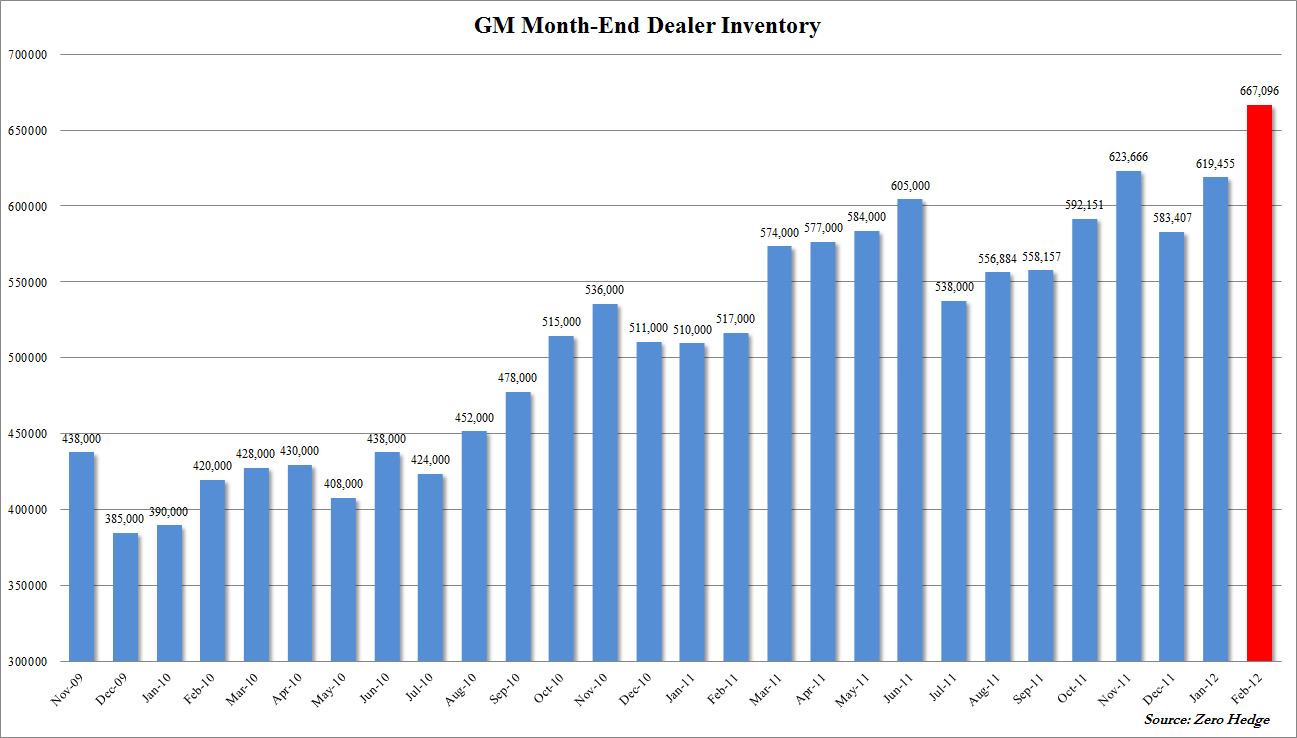
Filed under: Uncategorized | Tags: auto bailout, bailouts, car dealers, cash for clunkers, channel stuffing, energy, General Motors, GM, Government Motors, inventory, new car inventory, peak oil, transportation
via Zero Hedge:
Filed under: Uncategorized | Tags: boehner, congress, energy, gas prices, Mitch McConnell, peak oil, reid, SPR, strategic petroleum reserve
And that leaves me in weird agreement with Mitch McConnell, one of the most objectionable individuals in the entire den of thieves on Capitol Hill:
“The [SPR] is there for an emergency situation. You have to ask the question: If there were release from the [SPR], would it have the desired effect, and how long would it have the desired effect?” McConnell said.
via Worried Dems pressing Obama on gas prices – TheHill.com.
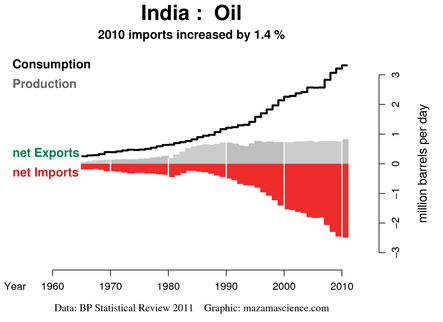
Filed under: Uncategorized | Tags: available net exports, Chindia, energy, India, India oil consumption, India oil imports, peak oil, unavailable net exports
Via the Energy Export Databrowser:
Also — China’s import picture.
 Industrialized Cyclist Notepad