


Filed under: Uncategorized | Tags: auto sales, bailouts, cars, FRED, Government Motors, light vehicle sales, transportation, vehicle miles, Vmt
…with vehicle miles traveled in yellow.

Filed under: Uncategorized | Tags: 2010 fatalities, cyclist fatalities, fact sheet, FARS, gov pubs, NHTSA, traffic deaths, transportation
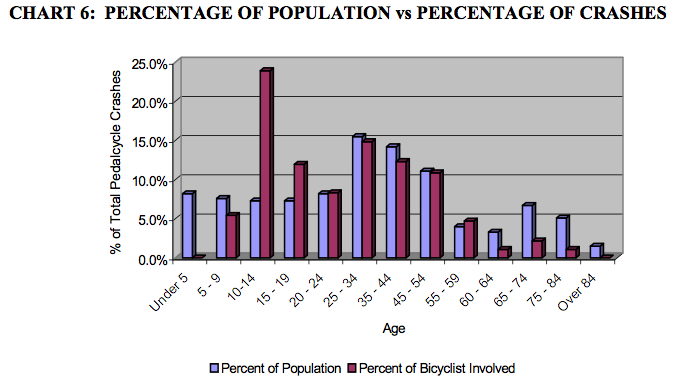
Take this back to 1970 and you would see a far more extreme change.
The decline of child cycling is the most important story in American cycling, rears its ugly head in data like this.
via NHTSA Bicyclists and Other Cyclists Fact Sheet 2010 (pdf): http://www-nrd.nhtsa.dot.gov/Pubs/811624.pdf

Filed under: Uncategorized | Tags: Chevrolet, heavy trucks, light trucks, light vehicle market share, light vehicles, passenger vehicles, pick em up trucks, pick-up trucks, pickup trucks, Ram 2500, SUV's, transportation, transportation trends United States, vehicle size
…

via Transportation Energy Data Book, ch. 4 (pdf): http://cta.ornl.gov/data/tedb31/Edition31_Chapter04.pdf
via a comment on Oil Drum.
Filed under: Uncategorized | Tags: bicycle accident statistics, bicycle accidents, bicycling, car-bike crashes, cycling, cycling injuries, fatality rates, Fatality risk, Great Britain, journal of epidemiology, journal of epidemiology and community health, Mindell, modal risk, OP33, pedestrian accident statistics, pedestrian risk, suburban cycling, transportation, travel modes, urban cycling
Mindell, Lesley, Wardlaw. “Exposure-based Assessment of Modal Travel Risk in England Using Routine Health Data,” Journal of Epidemiology and Community Health, September 13, 2012.
Young male drivers appear to have a higher fatality risk than cyclists in England. This is latched onto as quite good news for cyclists. The results of this study depend entirely on responses given on Britain’s National Travel Survey.
Results: Fatalities per million hours’ use (f/mhu) varied little (0.15–0.45f/mhu by mode for men, 0.09–0.31f/mhu for women). Risks were similar for men aged 21–49 years for all three modes and for female pedestrians and drivers aged 21–69 years. The group most at risk for each mode were: male drivers aged 17–20 years (1.3f/mhu, 95% CI 1.2, 1.4); male cyclists aged 70 years or older (2.2 f/mhu, 1.6, 3.0) and female pedestrians aged 70 years or older (0.95 f/mhu, 0.86, 1.1). In general, fatality rates were substantially higher amongst males than females, except for drivers aged 60 years or older. Risks per hour for male drivers under 30 years were similar or higher than for male cyclists; for 17–20 year olds the risk was higher for drivers (33/Bn km, 95% CI 30, 36; 1.3f/mhu, 1.2, 1.4) than cyclists (20/Bn km, 10, 37; 0.24f/mhu, 0.12, 0.45) using distance or time.
Abstract: http://jech.bmj.com/content/66/Suppl_1/A13.2
Filed under: Uncategorized | Tags: Arizona, bicycle, bicycling, bicycling by children, bicycling safety, Bike accidents, child cyclists, curb-cut jungle, industrialized cyclist, kids on bikes, Mesa, pdf, police reports, Safe Routes to School, suburban areas, suburban cycling, suburbia, traffic accidents, transportation, urban cycling
Especially in suburban areas. Here’s Mesa, AZ 2005.
Click to access bike_analysis.pdf
via The Industrialized Cyclist Research Page
click to enlarge
Filed under: Uncategorized | Tags: Afghanistan, afghanistan pakistan, energy, India, India oil imports, Iran, Natural gas, natural gas exports, natural gas imports, Pakistan, TAPI, Trans-Caspian pipeline, transportation, Turkmen gas pipeline, Turkmenistan
Turkmenistan-Afghanistan-Pakistan-India

via Investors sought for for Turkmen gas pipeline – The National.
Filed under: Uncategorized | Tags: 255 Washington, bicycle parking, City government, denver, parking requirements, transportation, zoning, zoning code
Sort of required.
Download complete Denver Zoning Code (pdf), effective 2010.
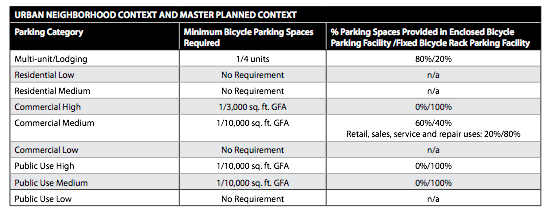
click to enlarge/sharpen
Filed under: Uncategorized | Tags: 2012, disruptions, EIA, emergency survey, fuel shortages, gas, gas lines, gas rationing, gasoline shortage, New York City, power outages, Sandy, transportation
via EIA: http://www.eia.gov/special/disruptions/hurricane/sandy/gasoline_updates.cfm

Filed under: Bike of the Day | Tags: Art of Cycling, art of urban cycling, bicycling, bike, biking, cycling, food, Raleigh, recipe for disaster, transportation, urban cycling, vintage bicycle

Upon closer inspection, looks like a recipe for disaster.
Filed under: Uncategorized | Tags: Chris Christie, gas rationing, gas supplies, gasoline, gasoline shortage, gasoline stocks, petroleum products, refined petroleum, refineries, transportation, urban cycling
The lines themselves only exacerbated the problem; reports in the local media provoked drivers to buy gasoline before stations ran out. Some spent what fuel they had searching for more and could be seen pushing vehicles toward relief.
“I just want to have it, because you don’t know how long this is going to last,” said Richard Bianchi, waiting in the half-mile line at the Sunoco in Union with a tank that was three-quarters full.
via Gasoline Runs Short, Adding Woes to Storm Recovery – NYTimes.com.
This is also what happened after Ike n’ Katrina Gustav in many areas of the South when the refineries went out. (2008 — As described in Cyclist’s Manifesto.) Scarcity of supply does not cause the people to get together, conserve and steward resources. In fact it causes just the opposite reaction. They go nuts, and try to acquire more fuel than they ever did before, faster than they ever did before. Petrol panic! Every man for himself!!
When the going gets tough, the tough do not get going.
Politicians could get pro-active by (1) telling the truth (2) encouraging conservation so those who most need fuel (those who perform critical tasks for the rest of us, for instance) will have it, and (3) instituting a temporary rationing program in advance of supply problems like this, which are easily predicted.
Ha! Can you imagine? No wonder Chris Christie looks like a deer in the headlights.
Filed under: Uncategorized | Tags: FRED, highway spending, highways and streets, public spending, transportation
Highways and streets: blue
Education construction: orange
Health care construction: red
amusements and rec: green

click to enlarge
Filed under: Uncategorized | Tags: art of urban cycling, bike crashes, streetcar tracks, toronto, traffic accidents, transportation, urban cycling
An impressive tally.
However, 96 of the 690 crashes studied in downtown Toronto and Vancouver directly involved streetcar or train tracks. Eighty-seven of those accidents were in Toronto, accounting for 31.5 per cent of all bike accidents in the city that led to an injury that required a visit to an emergency department.
via Streetcar tracks blamed in one-third of Toronto bike accidents.
Filed under: Uncategorized | Tags: bicycle infrastructure, Bike accidents, Canada, cycle tracks, cycling, risk, Teschke, toronto, traffic accidents, transportation, urban cycling
Objectives. We compared cycling injury risks of 14 route types and other route infrastructure features.
Methods. We recruited 690 city residents injured while cycling in Toronto or Vancouver, Canada. A case-crossover design compared route infrastructure at each injury site to that of a randomly selected control site from the same trip.
Results. Of 14 route types, cycle tracks had the lowest risk (adjusted odds ratio [OR] = 0.11; 95% confidence interval [CI] = 0.02, 0.54), about one ninth the risk of the reference: major streets with parked cars and no bike infrastructure. Risks on major streets were lower without parked cars (adjusted OR = 0.63; 95% CI = 0.41, 0.96) and with bike lanes (adjusted OR = 0.54; 95% CI = 0.29, 1.01). Local streets also had lower risks (adjusted OR = 0.51; 95% CI = 0.31, 0.84). Other infrastructure characteristics were associated with increased risks: streetcar or train tracks (adjusted OR = 3.0; 95% CI = 1.8, 5.1), downhill grades (adjusted OR = 2.3; 95% CI = 1.7, 3.1), and construction (adjusted OR = 1.9; 95% CI = 1.3, 2.9).
Conclusions. The lower risks on quiet streets and with bike-specific infrastructure along busy streets support the route-design approach used in many northern European countries. Transportation infrastructure with lower bicycling injury risks merits public health support to reduce injuries and promote cycling. (Am J Public Health. Published online ahead of print October 18, 2012: e1-e8. doi:10.2105/AJPH.2012.300762)
Filed under: Uncategorized | Tags: auto sales, car and truck sales, FRED, light trucks, retail sales, transportation, vehicle sales

via FRED
Filed under: Uncategorized | Tags: average mpg, cars, energy efficiency, fuel efficiency, gasoline consumption, mythology, oil consumption, peak oil, transportation, Vmt
via http://www.theoildrum.com/node/9542#more

The recent drop in oil consumption is not due to increases in fuel efficiency.
Filed under: Uncategorized | Tags: california, energy, gasoline supply, transportation
Gasoline station owners in the Los Angeles area including Costco Wholesale Corp. (COST) are beginning to shut pumps because of supply shortages that have driven wholesale fuel prices to record highs.
Costco’s outlet in Simi Valley, 40 miles (64 kilometers) northwest of Los Angeles, ran out of regular gasoline yesterday and was selling premium fuel at the price of regular, Jeff Cole, Costco’s vice president of gasoline, said by telephone. The company hasn’t been able to find enough unbranded summer-grade gasoline to keep its stations supplied, he said.
via California Gas Stations Begin to Shut on Record-High Spot Prices – Bloomberg.
Filed under: Bike of the Day | Tags: Comp-23, Flite, mountain bike, mountain biking, P-22, P-23, rigid fork, Ritchey, singletrack, Spinergy, Tange, TIG-welded, Tom Ritchey, transportation, vintage mountain bike
With custom factory paint. In its native habitat.

Filed under: Uncategorized | Tags: affect heuristic, bicycle accidents, bicycle safety, bicycling, bike commuting, modism, road rage, Slate, transportation, Why You Hate Cyclists
This article makes a good point or two.
I’d just point out a minor issue. If fatalities-per-trip is falling, that might not mean that cycling is safer. It might just mean people are making more frequent, shorter trips. The metric you want is (if you want to use fatalities) fatalities per hour of bike use. But this is an even more elusive figure which ultimately relies on self-reported surveys of bike use — allowing us to fill in the blanks (erroneously) with our emotions as the article mentions. Furthermore, injuries might be higher even if fatalities are lower.
If all cyclists suddenly started following the letter of the law, cyclists would be much more in the way, and negative emotions toward cyclists would grow, not disappear. But that’s just a theory.
Cyclists are annoying: Why you think they’re a menace on two wheels. – Slate Magazine.
Filed under: Uncategorized | Tags: energy, peak oil, transportation, urban cycling, vehicle miles traveled, Vmt
Interesting times, exhibit 67.
Via http://www.fhwa.dot.gov/policyinformation/travel_monitoring/12jultvt/index.cfm

Filed under: Uncategorized | Tags: cars, EIA, energy, Energy Information Association, gas stocks, gasoline, stocks, transportation
U.S. stocks of finished gasoline, via EIA.

click to enlarge
 Industrialized Cyclist Notepad