


Filed under: Uncategorized | Tags: fracking, hydraulic fracturing, Marcellus, Pennsylvania, Pennsylvania fracking law, shale gas, shale oil, tight gas, tight oil, Tom Corbett
And the public at large of course. “Non-disclosure agreement.” According to this report anyway.
… If a company does release information about what is used, health care professionals are bound by a non-disclosure agreement that not only forbids them from warning the community of water and air pollution that may be caused by fracking, but which also forbids them from telling their own patients what the physician believes may have led to their health problems. A strict interpretation of the law would also forbid general practitioners and family practice physicians who sign the non-disclosure agreement and learn the contents of the “trade secrets” from notifying a specialist about the chemicals or compounds, thus delaying medical treatment.
The clauses are buried on pages 98 and 99 of the 174-page bill, which was initiated and passed by the Republican-controlled General Assembly and signed into law in February by Republican Gov. Tom Corbett.
via Fracking: Pennsylvania Gags Physicians | Truthout.
Filed under: Uncategorized | Tags: Brazil, Chevron, CVX, Marcelo del Negri, offshore oil production, offshore oil spill, oil spill
Seventeen Chevron Corp. (CVX) and Transocean Ltd. executives were banned from leaving Brazil pending an investigation into an offshore oil spill.
The order was signed by a federal judge last week as part of the probe into the 3,000-barrel slick off Rio de Janeiro in November, Marcelo del Negri, a spokesman for the federal prosecutor’s office, said in a telephone interview yesterday. Transocean owned the rig involved in the spill.
via Chevron, Transocean Managers Banned From Leaving Brazil – Bloomberg.
Filed under: Bike of the Day, Uncategorized | Tags: 29er, hankerin', IF Deluxe, Independent Fabrication, Independent Fabrications, Indy Fab, Josh, mountain bike, singletrack, Sunnyside, ti, titanium, trail riding
This I.F. Deluxe belongs to my old Sunnyside neighbor Josh. If this beauty doesn’t get you hankerin’ for a hunk of trail, you may have a serious disorder of the hankerin’ system.




Filed under: Uncategorized | Tags: Aspen, bike borrowing, bike share, bike theft
http://www.aspentimes.com/article/20120317/NEWS/120319869/1077&ParentProfile=1058

Filed under: Uncategorized | Tags: energy, Lara Uselding, Mitsubishi, NRC, nuclear accident, nuclear power, Nuclear Regulatory Commission, radiation leak, San Onofre
Thousands of brittle tubes. Seems like a bad plan.
The Nuclear Regulatory Commission said Thursday it was sending a special team of inspectors to try to determine why the metal tubes, which were installed in Unit 3 in 2010, have become frail enough to pose a risk of leaks.
“This is a significant issue,” said NRC spokeswoman Lara Uselding. “A tube rupture is really the concern.”
Investigators have been looking into excessive wear on tubes in Unit 3 and its twin, Unit 2, which has been off line for maintenance and refueling. In a $670 million overhaul, two huge steam generators, each containing 9,700 tubes, were replaced in Unit 2 in fall 2009 and a year later in Unit 3.
via 4 more tubes fail in tests at Calif. nuke plant – BusinessWeek.
Filed under: Uncategorized | Tags: Bakken, Daniel Yergin, depletion, EIA, IHS CERA, Iran, Iran sanctions, oil predictions, oil supply, oil supply predicitons, peak oil, shale oil, The Yergin Gap, tight oil
Everything Yergin says here is true. He gives the impression of someone who chooses his words carefully. He won a Pulitzer and wrote two giant books about oil. But he somehow always leaves out half the story. Just doesn’t get it or pretends it doesn’t exist.
Yergin is a self-described optimist who believes human ingenuity (and higher prices) will produce as much oil as mankind would ever want or need. Like many of his ilk, he emphasizes various sources of supply that are on the verge of coming on line, and new sources of supply like the Bakken that are adding to existing supply. He mentions “disruptions” in supply, and indeed there are many of those. Disruptions are always on the verge of being restored to their rightful levels, you see. What he and his cornucopian brethren never mention is the ongoing natural depletion of existing giant oil fields. And his predictions never seem to take this depletion into account — which means his predictions (and those of his firm IHS CERA) have been absolutely laughable. I mean, they will make you lol those old predictions. The existing world of oil makes a lot more sense if you take into account the phenomenon of depletion; unfortunately the future looks a lot more bleak.
“Pulitzer Prize-winning Daniel Yergin” gets trotted out repeatedly, because his blind spot on depletion is quite useful to the contingent that thrives on the false belief that excessive regulation is throttling production in the US. And there is oh so much cash behind that fakery. Yergin’s paycheck depends on his not acknowledging depletion. The whole circus is really quite shameful, isn’t it?
Here he is in the WSJ optimistically listing factors that could keep the price of oil down, counteracting tensions with Iran. Optimism! Let’s see: New supply in the US, and various potential new sources of supply around the world. Check. Also, reductions in demand. Check. He doesn’t mention that “new supply” would have to amount to a Saudi Arabia’s worth every few years just to make up for ongoing depletion. In fact, he doesn’t mention depletion at all. Well done, Daniel.
New petroleum supplies could come into the market over the year from a variety of sources—from Iraq and Angola to Libya and Colombia. And notably, 300,000 barrels per day or more from the United States—primarily from North Dakota and Texas and from a rebound in off-shore production.
The other offset could come from reductions in demand. U.S. gasoline consumption so far this year is down over last year. China’s new economic growth target of 7.5%—down significantly from the 10% or so of recent years—would mean lower growth in its petroleum consumption. Of course, a rebound in global economic growth would increase demand, not only in China but in the U.S., Japan and Europe.
via Daniel Yergin: What's Behind Rising Gas Prices? – WSJ.com.
Filed under: Uncategorized | Tags: Air pollution, diesel, diesel exhaust, environmental pollution, lung cancer, mine workers, miners, miners and lung cancer
http://www.oxfordjournals.org/our_journals/jnci/press_releases/silvermandjs034.pdf
This case–control study nested within a cohort of miners showed
a strong and consistent relation between quantitative exposure to diesel exhaust and increased risk of dying of lung cancer. To our knowledge, this is the first report of a statistically significant exposure–response relationship for diesel exposure and lung cancer based on quantitative estimates of historical diesel exposure with adjustment for smoking and other potential confounders.
Filed under: Uncategorized | Tags: crude oil, oil production, oil supply, peak oil, Saudi Arabia, Saudi Arabian oil production, Schumer
But Senator — to what degree will desperate-sounding ‘comments’ from US officials like yourself counteract those hypothetical emphatic promises? Seems like Shoom is scrambling for relevance.
Schumer called on Saudi Arabia to repeat its intention to make up for supply losses, arguing the comments will drive down gas prices, which are tethered to global oil prices.
“If the markets believe this is real, the price will come down even further. So we are asking the Saudis to repeat this promise,” Schumer said.
“The more explicit they are, the more emphatic they are, the more they ensure the markets that they are for real here,” he continued, “the more the markets will calm down more permanently and the more the price will come down.”
via Schumer: Saudi Arabia's plan to increase oil supply will lower gas prices – The Hill's E2-Wire.
Filed under: Uncategorized | Tags: 'Bike Thief', Casey Neistat, New York Times, Pravda, Van Neistat
I recently spent a couple of days conducting a bike theft experiment, which I first tried with my brother Van in 2005. I locked my own bike up and then proceeded to steal it, using brazen means — like a giant crowbar — in audacious locations, including directly in front of a police station. I wanted to find out whether onlookers or the cops would intervene. What you see here in my film are the results.
via ‘Bike Thief’ – NYTimes.com.
Filed under: Uncategorized | Tags: Brent, Fatthouh, futures prices, James Hamilton, Kilian, Mahadeva, NYMEX, oil prices, speculation, spot prices, WTI
A paper by Fatthouh, Kilian and Mahadeva (pdf)
Abstract: A popular view is that the surge in the price of oil during 2003-08 cannot be explained by economic fundamentals, but was caused by the increased financialization of oil futures markets, which in turn allowed speculation to become a major determinant of the spot price of oil. This interpretation has been driving policy efforts to regulate oil futures markets. This survey reviews the evidence supporting this view. We identify six strands in the literature corresponding to different empirical methodologies and discuss to what extent each approach sheds light on the role of speculation. We find that the existing evidence is not supportive of an important role of speculation in driving the spot price of oil after 2003. Instead, there is strong evidence that the co-movement between spot and futures prices reflects common economic fundamentals rather than the financialization of oil futures markets.
Filed under: Uncategorized | Tags: Badger Daylighting, COGC, EOG Resources, fracking, fracking waste, Garden Creek 7-14H, Garden Creek O7-14H, Grove, hydraulic fracturing, radioactive fracking sand, radioactive fracking waste, radionucleides, Weld County, WTF
With articles like this, you’ve got to wonder.
Hydraulic fracturing involves the use of millions of gallons of water, chemicals and sand.
Occasionally, some of that sand is radioactive.
Oh. You don’t say.
The state is investigating a possible inappropriate dumping of fracking-related radioactive sand into an unpermitted pit at an EOG Resources oil well in northern Weld County northwest of Grover.
The radioactive sand dumping occurred March 8 during a state field inspection of an oil well known as the Garden Creek 28-07H well, the Coloradoan’s search of state oil well inspection records revealed.
via State investigating radioactive sand dumping related to fracking | The Coloradoan | coloradoan.com.
Filed under: Uncategorized | Tags: COGC, Colorado Oil and Gas Commission, drilling regulations, EOG Resources, fracking, fracking sand, Garden Creek 07-14H, Niobrara, oil production, radioactive fracking sand, tight oil, Weld County
A sensitive area due to shallow groundwater. According to a site assessment, groundwater is 20 feet below the surface.
http://ogccweblink.state.co.us/results.aspx?id=415806

Filed under: Uncategorized | Tags: Asia, Chris Nelder, Foucher, global oil consumption, Norway, OECD, oil demand, petroleum consumption, petroleum demand, world oil consumption
Sam Foucher chart via Chris Nelder’s latest:

Filed under: Uncategorized | Tags: Asian oil demand, Chindia, Chris Nelder, demand destruction, efficiency, energy, fat gets trimmed, fuel efficiency, global oil consumption, OECD, peak oil, transportation
Chris Nelder explains a critical dilemma facing American consumers. As total available oil exports decrease (at a rate that would bring them to absolute zero in about four years), inefficient westerners will be outbid by the new Asian “middle class” for these diminishing supplies.
Of course, exports can fall to zero in theory only, not in practice. In reality, high prices will kill the most inefficient, unsubsidized demand first—in the U.S. and Europe. Next, demand will be curbed in net exporting countries, first via the removal of domestic fuel subsidies, and then by world prices. The demand of the four billion people in Asia will be the last to go because they use it most efficiently.
via Oil demand shift: Asia takes over | SmartPlanet.
Translation: The fat gets trimmed. The fat is here.
Filed under: Uncategorized | Tags: Athabasca, carbon emissions, metric tons of carbon, oil sands, peatlands, tar sands
…
They also say that the peatlands under consideration are currently holding on to 11-47 million metric tons of carbon that will be released into the atmosphere as part of the mining process. And then, because the mining companies plan to return the land to dry forest instead of the original peatlands, the area will lose the ability to sequester carbon in the future; this they say will add up to about 5,700-7,200 mt of carbon each year, which they say should be looked at as a net gain of carbon emissions each year.
via http://www.physorg.com/news/2012-03-university-team-canadian-oil-sands.html
Abstract:
Oil sands mining and reclamation cause massive loss of peatland and stored carbon.
Filed under: Uncategorized | Tags: Iraq, Iraqi civil war, Iraqi oil production, Lukoil, Norway, oil production, Russia, Statoil, West Qurna, West Qurna-2
As Norwegian Statoil bugs out.
Lukoil aims to invest around $2 billion in the West Qurna-2 oil field in Iraq this year, Bloomberg News reports. A company spokesman told Bloomberg that $200 million was invested there in 2011.
The oil company, the largest private energy company in Russia, also announced plans to start construction on a new oil pipeline and spell out details for its drilling program.
via Lukoil unveils investment plans for Iraq – UPI.com.
Filed under: Uncategorized | Tags: B-Cycle, bicycle sharing, bike share programs, denver, Kaiser Permanente
Denver’s public-private bike share program, B-Cycle, is back for the season, with expanded hours and (so it’s been said) a few new locations. Maybe one around here.
http://denver.bcycle.com/WhatisDenverBcycle.aspx

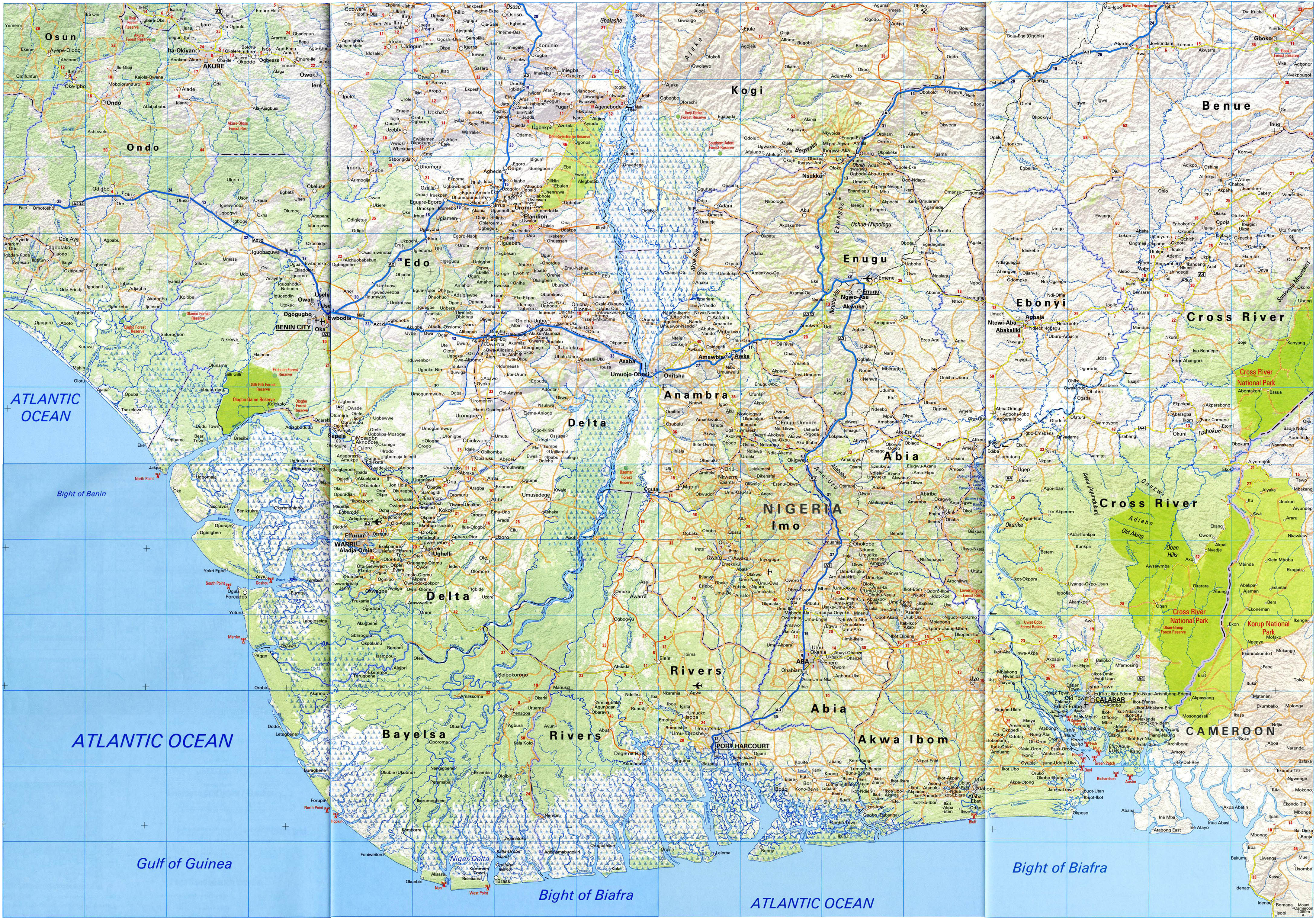
Filed under: Uncategorized | Tags: Chevron, Chevron Nigeria Limited, Funiwa 1A, gas leak, Koluma, Nigeria, Nigerian natural gas production, Nigerian oil production, off-shore, oil production, relief well, rig fire
In familiar fashion, there is some difference of opinion about whether the well is still leaking. A relief well was drilled but didn’t do the trick.
Chevron Corp released a statement declaring that the raging fire had gone out by itself. “The site of the Funiwa 1A natural gas well offshore Nigeria ceased burning on Friday, March 2. The well stopped flowing on its own,” the statement said. “CNL (Chevron Nigeria Limited) has detected no natural gas flowing from the well since the fire ceased burning and is monitoring the area continuously.”
Nigerian communities local to the area have confirmed that the fire has indeed gone out, but claim that the gas is still leaking at a steady rate, and has killed many fish and polluted the area.
Matthew Sele, from the town of Koluma just near to the offshore rig, said that, “The fire has been put off since Friday, but the gas emission is worse. Raw gas is continuing to bubble in the air and is making it hard for people to breathe.”
via Chevron's Nigerian Rig Fire Finally Goes Out on its Own.
(This is about five days old.)
Filed under: Uncategorized | Tags: bitumen, Canada, crude oil, economic threshold, energy, marginal price, oil, oil sands, Suncor, syncrude, tar sands, unconventional oil
More commonly, less accurately known as oil sands.
From Canada’s Energy Future (pdf), a 2011 report from the National Energy Board.
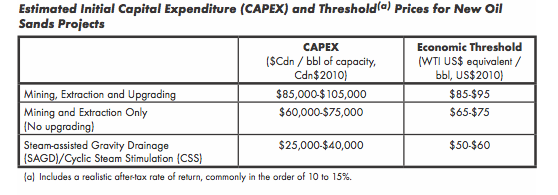
The threshold will be highly dependent on the price of natural gas.
 Industrialized Cyclist Notepad