


Filed under: Bike of the Day | Tags: apehangers, bicycle, cruiser bike, cycling, Schwinn, urban cycling
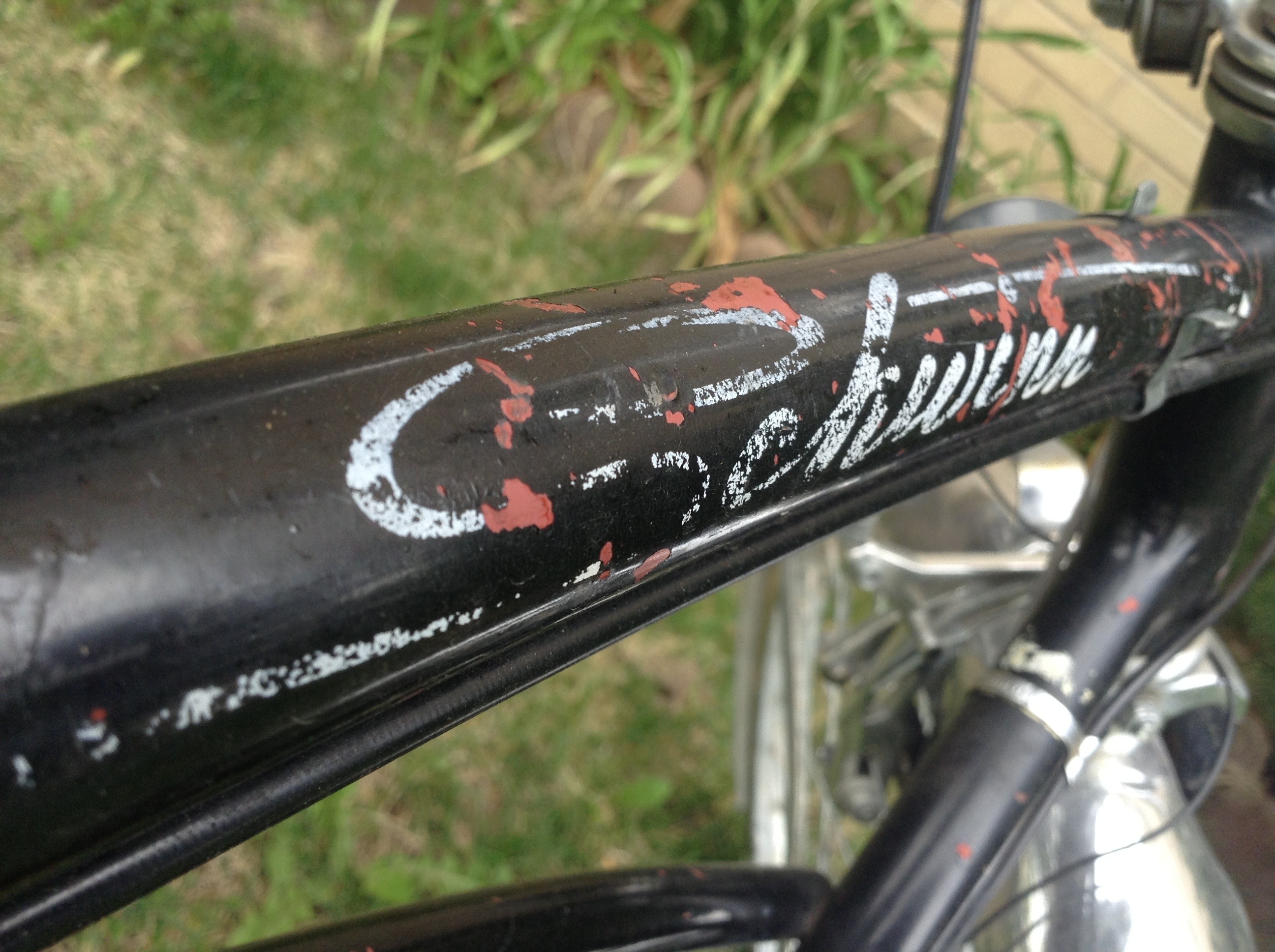

Cruiser style frame, apehanger bars and 10 speeds.
Filed under: Uncategorized | Tags: bicycling safety, Boulder, cycling accidents, Lyons, Patrick Ward, Van Duym, vehicular homicide
Turns out the drunk who ran over and killed Michel Van Duym had a real psychological problem with cyclists. Looks real bad.
LYONS – The driver facing charges in a crash over the weekend that killed a bicyclist in Lyons spoke out against cyclists at a series of public meetings in 2010.Catherine Olguin with the Boulder County District Attorneys Office says Patrick Ward is due in court Thursday at 2 p.m.Deputies arrested Ward Saturday afternoon in Lyons on eight charges, including vehicular homicide, for the death of a Boulder bicyclist.Ward lives in Lyons and has gone on the record in that town out at least six times to express his displeasure with the cyclists who share the road.Lyons resident Colleen Dickes understands the tension between people in cars, and people on bikes.”Theres a lot of cyclists,” Dickes said. “People are always trying to avoid them. I think there is always going to be a friction.”Patrick Ward knew that friction well.Lyons Town Administrator Victoria Simonsen confirmed to 9NEWS that Ward, 69, spoke at public meetings in March, April, May, June, and July of 2010 when the town was considering a 10-year plan that included promoting cycling in Lyons.
Filed under: Uncategorized | Tags: Bakken, crude oil, energy, IEA, IEA forecast, OECD, oil price predictions, oil supply, OPEC, peak oil, refining capacity, shale oil, tight oil
IEA… Not a good track record with the predictions. Doesn’t stop ’em from throwing out new crazy numbers every year.
While geopolitical risks abound, market fundamentals suggest a more comfortable global oil supply/demand balance over the next five years. The MTOMR forecasts North American supply to grow by 3.9 million barrels per day (mb/d) from 2012 to 2018, or nearly two-thirds of total forecast non-OPEC supply growth of 6 mb/d. World liquid production capacity is expected to grow by 8.4 mb/d – significantly faster than demand – which is projected to expand by 6.9 mb/d. Global refining capacity will post even steeper growth, surging by 9.5 mb/d, led by China and the Middle East.
via IEA – May:- Supply shock from North American oil rippling through global markets.
Filed under: Uncategorized | Tags: Bakken, enegy, frack, fracking, IEA, oil journalism, oil production, oil shale, oil supply, Peak Demand, peak oil, shale oil, tight oil, Tom Gjelten
As NPR’s Tom Gjelten reports:
“Petroleum engineers have always known about the untapped underground oil in the United States, but it was unreachable, trapped in tight shale rock. Then the engineers figured out how to crack the rock. Hydraulic fracturing — fracking — got that ‘tight oil’ finally flowing in places like North Dakota.”
via Huge Boost In U.S. Oil Output Set To Transform Global Market : The Two-Way : NPR.
Wrong, Tom. The tight oil has been ‘reachable’ for several decades, it was just such an expensive process that it made no sense to do it when oil was cheap — a money-losing proposition. Now, all the cheap oil is gone, and out comes the ‘unconventional’ oil.
Gjelten also said that the decline in oil consumption in the US was due to efficiency (check the VMT chart Tom). There was no mention of depletion of existing fields, or the striking decline rate of fracked shale wells. And he reported that cheaper oil is just over the horizon.
Would it hurt Mr. Gjelten to do just a tiny bit of research on the topic of his reports so he doesn’t sound like a complete idiot?
Filed under: Uncategorized | Tags: carbon, carbon credits, Chris Martenson, CO2, coal, energy, LNG, natural gas exports, Obama, peak oil
Chris Martenson, smart about energy, busts the O administration for its disingenuous claims about lowering carbon emissions with natural gas:
To claim credit for lowered carbon emissions due to natural gas and then also support the idea of exporting LNG (where fully 25% of the base energy is combusted in order to simply liquefy the product) is hypocritical. These are two ideas that work against each other. Either you use natural gas wisely and efficiently as you move away from coal resources and claim a carbon credit for these actions, or you support throwing 25% of natural gas’ energy right into the atmosphere just to cool it for transport.
So it’s a fallacy to imply that exporting natural gas will help lower carbon emissions. In all honesty, total emissions will most likely be higher than otherwise – because let’s be realistic; the most likely path is for humanity to burn up all the natural gas and then burn up the coal next.
Further, where the U.S. carbon emissions have gone down due to less coal being burned, that happy circumstance resulted in Europe doing exactly the opposite:
[…]
Does natural gas help to lower carbon emissions? No, it merely pushes the carbon emissions elsewhere while the U.S. feasts on relatively cheap natural gas domestically. The only thing that lowers carbon emissions is NOT burning coal, natural gas, or petroleum – collectively.
via The Obama Administration's Policy on LNG Makes No Energy Sense | Peak Prosperity.
Filed under: Uncategorized | Tags: Battaglin, bicycle racing, blood doping, CERA, Di Luca, doping, EPO, Garmin, Giro d'Italia, Neal Rogers, Vaughters, VDV, Velonews, weasel power
This strikes me as hypocritical and simple-minded stuff from Neal Rogers, cheering Di Luca’s getting caught by young unknown riders who have yet to be caught in any doping dragnets.
Garmin is packed full of “riders with controversial pasts.” Let’s see if he has the same venom for them as they defend their Giro title.
While his move was bold, that Di Luca was unable to hold his attack on Tuesday is encouraging.
The day when the pro peloton is clear of suspicion will likely never materialize. However, the day when the peloton is clear of riders with controversial pasts may be only a few years away.
via Commentary: Why Battaglin’s Giro stage win matters.
Translation: Di Luca’s defeat helps us pretend that they’re not all still doping.
Filed under: Uncategorized | Tags: bicycle helmets, bicycling, Costco Connection, cycling, FalconGuides, helmets, Hurst, Karen Bannan, Robert Hurst, The Bicycle Commuter's Handbook, urban cycling, USCPSC
Big Time Stuff, y’all.
Costco Connection – May 2013 – Page 48-49.
…Some helmets offer more protection, with harder shells and fewer ventilation holes, but will not be as comfortable for long rides, says Robert Hurst, the author of several bicycle-related books, including The Bicycle Commuter’s Handbook (FalconGuides, 2013). “You don’t need to spend a ton of cash to get a decent helmet, but steer clear of bargain-bin knock-offs that haven’t been certified by the U.S. Consumer Product Safety Commission,” he says.
Filed under: Uncategorized | Tags: bicycles, concept bike, levitation bike, Special Area, transportation
This fellow took not thinking much about how and why bicycles work to a new level before he drew up this “concept bike.”
Just looking at the “custom saddle” makes my Special Area hurt.

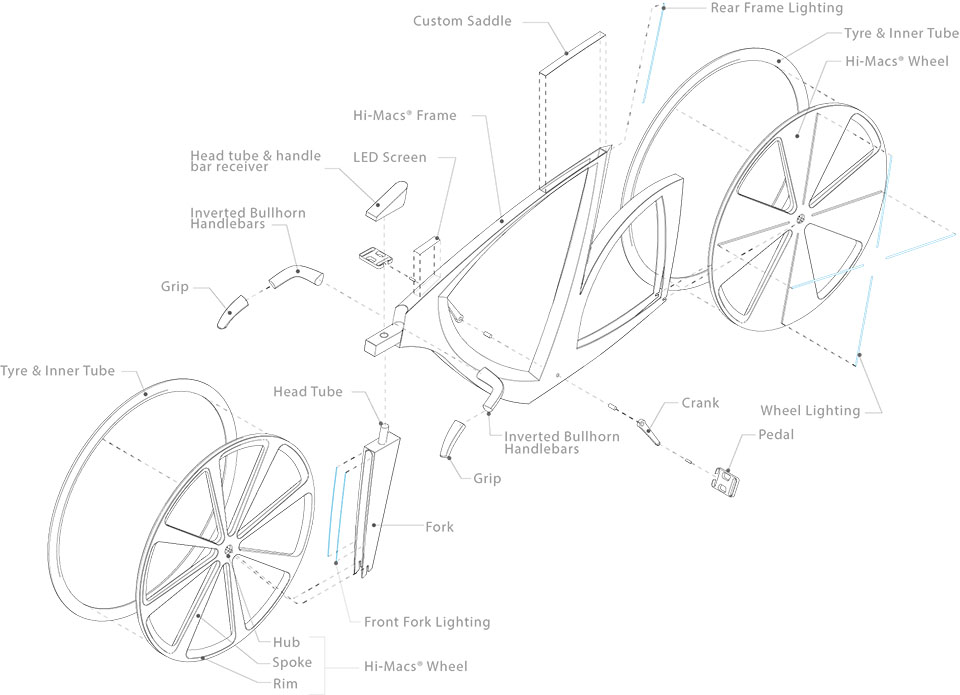
click to enlarge
Filed under: Uncategorized | Tags: bicycle crashes, bicycle safety, Boston, Cambridge, car-bike collisions, car-bike crashes, enforcement, Harvard, Jack Danilecki, traffic accidents
Capt. Jack Danilecki of the Boston police, former commander of the tactical bicycle unit, said that five cyclists were killed in Boston last year. Police are taking an initial step to address the problem by issuing reminders — in the form of $20 tickets — to cyclists who run red lights and stop signs that they are legally bound to obey the rules of the road.
via How to protect cyclists | Harvard Gazette.
Filed under: Uncategorized | Tags: clean, everybody went totally clean in '06, Giro d'Italia, Ischia, Italy, new era, Ryder
Stage two looks pretty cool. Short. Little island.
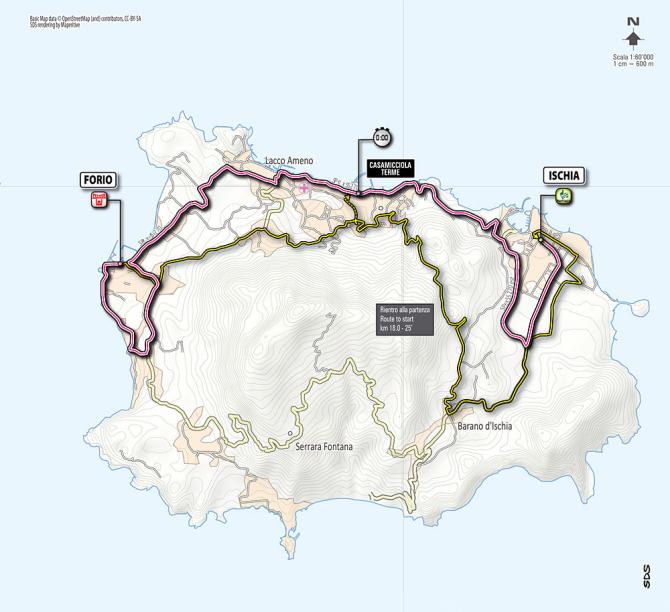
via http://www.cyclingnews.com/giro-ditalia/stage-2
Filed under: Uncategorized | Tags: BP, energy, Esso, Jamaica, Jamaica Aircraft Refuelling Services, jet fuel, Montego Bay, Petrojam, Sangster International Airport, St. James, Total, transportation
Earlier this week.
Highly placed police sources have confirmed that more than 200,000 litres of jet fuel has been stolen from the Sangster International Airport in Montego Bay, St James.
The fuel, valued at $20 million, is owned by a consortium, including Jamaica Aircraft Refuelling Services (partnership between PetroJam and British Petroleum), Esso and Total.
Filed under: Uncategorized | Tags: auto sales, cash for clunkers, FRED, light vehicle sales, Peak Demand, peak oil, vehicle sales
In the US that is. Includes large trucks.

click to enlarge
Filed under: Uncategorized | Tags: Bahati, Chris Carmichael, crit, criterium racing, racism, racism in cycling, USA Cycling
No, but today’s bike racing scene is hardly a Rainbow Coalition on wheels, that’s for sure.
Via Cycling in the South Bay:
USA Cycling hates black people.
You think that’s an exaggeration? I don’t. And in fact, it’s hardly surprising. African-Americans have been discriminated against in the sport of cycling since its very inception.
via USA Cycling’s black eye | Cycling in the South Bay.
Includes link to video of Bahati getting crashed at 2010 crit.
Filed under: Uncategorized | Tags: bicycling, bike-friendly states, cycling, cycling infrastructure, green transportation, LAB, LAW, League of American Bicyclists, League of American Wheelmen, transportation, transportation policy, urban cycling

via League of American Bicyclists (pdf): http://bicyclecolo.org/merchant/117/files/2013BFSrankingchart.pdf
Filed under: Uncategorized | Tags: Aramco, energy, KSA, Naimi, peak oil, Prince Faisal, Saudi Arabia, Saudi Arabian oil consumption, Saudi Oil Minister, Saudi oil production, Saudi production capacity
Even in a totalitarian government they can’t get their stories together.
“Saudi Arabia’s national production management scheme is set to increase total capacity to 15 million barrels per day and have an export potential of 10 [million] barrels per day by 2020,” Prince Faisal, a former Saudi ambassador to the US and UK said in a speech at the Belfer Centre for Science and International Affairs of Harvard University. The speech was delivered last week and posted on the centre’s website late Monday.
The prince clarified his position in an email on Tuesday. “Saudi consumption may reach five million barrels of oil by then [2020], hence the production capacity of fifteen million barrels,” is required to maintain country’s export potential, he said.
Saudi Arabia would be lucky to go past production of 9 million barrels a day by 2020 and, “we don’t see anything like 15 million barrels a day before 2030, 2040,” said Naimi in an appearance at the Centre for Strategic and International Studies in Washington DC Tuesday.
via Rift emerges over Saudi oil policy | GulfNews.com.
Notice in this article and others how any potential increase or decrease in Saudi oil production is always portrayed as a matter of policy, not geology.
Filed under: Uncategorized | Tags: bicycle racing schedule, European pro peloton, Giro, peloton, TDF, Tour de France calendar, Tour de Suisse, UCI, UCI race calendar, Vuelta a Espana
All perfectly clean races in a new era of clean, clean racing.
[…]
23-28 Apr 2013 Tour de Romandie (Sui)
4-26 May 2013 Giro d’Italia (Ita)
2-9 Jun 2013 Critérium du Dauphiné (Fra)
8-16 Jun 2013 Tour de Suisse (Sui)
29 Jun-21 Jul 2013 Tour de France (Fra)
27 Jul 2013 Clasica Ciclista San Sebastian (Esp)
27 Jul – 3 Aug 2013 Tour de Pologne (Pol)
12-18 Aug 2013 Eneco Tour (Ita)
24 Aug – 15 Sep 2013 Vuelta a España (Esp)
25 Aug 2013 Vattenfall Cyclassics (Ger)
1 Sep 2013 GP Ouest France – Plouay (Fra)
13 Sep 2013 Grand Prix Cycliste de Québec (Can)
15 Sep 2013 Grand Prix Cycliste de Montréal (Can)
5 Oct 2013 Giro di Lombardia (Ita)
9-13 Oct 2013 Tour of Hangzhou (Chn)
16-20 Oct 2013 Tour of Beijing (Chn)
via UCI confirms 2013 WorldTour calendar.
Filed under: Uncategorized | Tags: bicycle accidents, bicycle crashes, bicycling injuries, crashtastic, justice breyer, stephen breyer, Supreme Court, urban cycling
WASHINGTON (AP) — Supreme Court Justice Stephen Breyer is in a Washington hospital after shoulder replacement surgery following a bicycle accident.
[…]
Breyer injured his right shoulder in a fall Friday near the Korean War Veterans Memorial.
The justice previously broke his collarbone in an accident in 2011 and sustained broken ribs and a punctured lung in a bicycle mishap in 1993, before he joined the court.
via Breyer has shoulder surgery after bike accident – Yahoo! News.
Filed under: Uncategorized | Tags: energy, gas-electric, hev, hybrid, oil consumption, phev, Prius, transportation
Unimpressed with their cars’ performance and m.p.g. for the money. Still, hybrids are gaining popularity overall.
According to industry reports, only about one in three hybrid owners buy another gas-electric model when they trade in.
via Hybrid sales increase, but some eco-drivers are disappointed – Business on NBCNews.com.
Filed under: Uncategorized | Tags: DOJ, Elliot Peters, Lance Armstrong, LOL, USPS
…which some might feel to be weird.
WASHINGTON D.C. (AFP) — The U.S. Justice Department filed a formal complaint Tuesday against Lance Armstrong, saying the doping-disgraced cyclist and team owners defrauded the U.S. Postal Service of sponsorship money.
[…]
Elliot Peters, Armstrong’s attorney, disputed whether the USPS suffered any damage as a result of its 1998-2004 sponsorship of the team.
“The DOJ’s complaint against Lance Armstrong is opportunistic and insincere,” Peters said in a statement sent to AFP. “The U.S. Postal Service benefited tremendously from its sponsorship of the cycling team. Its own studies repeatedly and conclusively prove this. The USPS was never the victim of fraud.
via Reports: Justice Department files formal Armstrong complaint.
Poor poor USPS was defrauded by Lance. Why, they had NO IDEA that top bike racers used performance enhancing drugs when they signed up for this thing. Total blindside.
 Industrialized Cyclist Notepad