


Filed under: Uncategorized | Tags: Aramco, energy, KSA, Naimi, peak oil, Prince Faisal, Saudi Arabia, Saudi Arabian oil consumption, Saudi Oil Minister, Saudi oil production, Saudi production capacity
Even in a totalitarian government they can’t get their stories together.
“Saudi Arabia’s national production management scheme is set to increase total capacity to 15 million barrels per day and have an export potential of 10 [million] barrels per day by 2020,” Prince Faisal, a former Saudi ambassador to the US and UK said in a speech at the Belfer Centre for Science and International Affairs of Harvard University. The speech was delivered last week and posted on the centre’s website late Monday.
The prince clarified his position in an email on Tuesday. “Saudi consumption may reach five million barrels of oil by then [2020], hence the production capacity of fifteen million barrels,” is required to maintain country’s export potential, he said.
Saudi Arabia would be lucky to go past production of 9 million barrels a day by 2020 and, “we don’t see anything like 15 million barrels a day before 2030, 2040,” said Naimi in an appearance at the Centre for Strategic and International Studies in Washington DC Tuesday.
via Rift emerges over Saudi oil policy | GulfNews.com.
Notice in this article and others how any potential increase or decrease in Saudi oil production is always portrayed as a matter of policy, not geology.
Filed under: Uncategorized | Tags: energy, gasoline production, Peak Demand, peak oil, transportation, US oil consumption, vehicle miles traveled, VMT< DOT
No coherent explanation for the way the years are labeled across the bottom however.
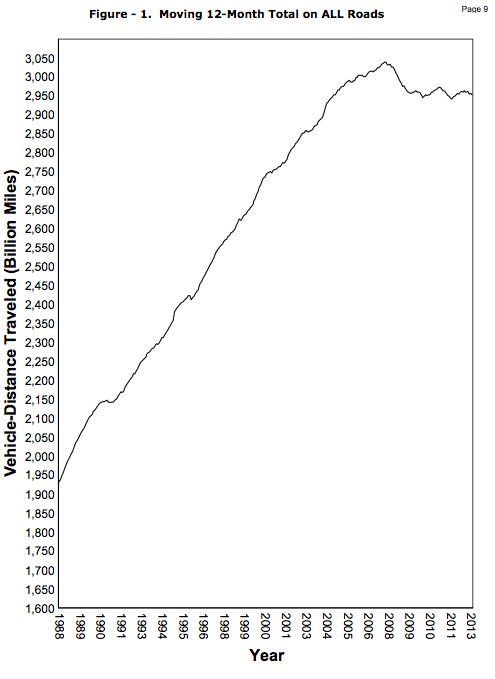
Data through February.
via (pdf) http://www.fhwa.dot.gov/policyinformation/travel_monitoring/13febtvt/13febtvt.pdf
Filed under: Uncategorized | Tags: Destination Cities, employment, fracking, Houston, National Migration Trend Report, peak oil, Texas, U-Haul, unemployment
…
PHOENIX (April 12, 2013) — U-Haul International, Inc., today released the results of the annual 2012 U-Haul National Migration Trend Report, titled “The U-Haul 2012 Top 50 U.S. Destination Cities.” According to moving data reflective of nationwide statistics for calendar year 2012, families moving to Houston took the No. 1 spot again, for the fourth year in a row.
via U-Haul: About: U-Haul Names Houston as Top 2012 U.S. Destination City.
Filed under: Uncategorized | Tags: ANE, China, China oil consumption, China oil imports, Chindia, crude oil, peak oil, The Yergin Gap, westtexas, Yergin
“China is importing an increasing amount of crude, which is the most crucial issue for the country’s energy supply,” said Zhang during the Boao Forum for Asia Annual Conference
And the most crucial issue for the world’s energy supply too.
One way to look at it is that we in the west are being outbid by people in Asia for available oil exports. The price is high because if it were any lower people would want to consume more than can currently be produced.
via China depends more on overseas oil |Economy |chinadaily.com.cn.
Filed under: Uncategorized | Tags: carbon dioxide emissions, China, Chindia, climate, CO2, Econbrowser, James Hamilton, natural gas liquids, NGLs, oil consumption, Peak Demand, peak oil, total liquids, transportation

And it’s worth remembering why that happened– we didn’t have a choice. Global field production of crude oil (excluding natural gas liquids, which are not used as transportation fuel) stagnated at about 74 million barrels/day between 2005 and 2008. It is up a couple of million barrels since then, but more than 100% of this increase has been consumed by China alone, forcing the U.S. and other countries to reduce our oil consumption.
via James Hamilton: Econbrowser: Declining U.S. carbon dioxide emissions.
Filed under: Uncategorized | Tags: Alice Cooper, API, Eighteen, energy, oil demand, peak oil, petroleum demand, US oil consumption
18-year low oil demand. 18 million barrels per day.
18 and I like it.
U.S. Oil Demand Fell to 18-Year Low for January, API Says – Bloomberg.

Filed under: Uncategorized | Tags: Brent, crude oil, Cushing, James Hamilton, peak oil, Seaway pipeline, spread, WTI

click to enlarge
Blue is Brent, black is WTI, green is the spread between them.
A relatively recent phenomenon explained by James Hamilton:
West Texas Intermediate is a particular grade of crude oil whose price is usually quoted in terms of delivery in Cushing, Oklahoma. Brent is a very similar crude from Europe’s North Sea. As similar products, you’d expect them to sell for close to the same price, and up until 2010 they usually did. But an increase in production in Canada and the central U.S. combined with a decrease in U.S. consumption has led to a surplus of oil in the central U.S. This overwhelmed existing infrastructure for cheap transportation of crude from Cushing to the coast, causing a big spread to develop between the prices of WTI and Brent.
via Econbrowser: Prices of gasoline and crude oil.
Filed under: Uncategorized | Tags: cost of extraction, energy, Kurt Cobb, Natural gas, oil production, peak oil
Here and there on occasion. Kurt Cobb in the CSM:
Currently, there appears to be no new transformative on-the-shelf technology that will significantly reduce the cost of extracting oil and natural gas. And so, barring a deep economic depression, we can look forward to prices for oil and natural gas that are consistently above the cost of production and therefore far above the bizarrely low forecasts in the air today. In fact, we should expect costs to continue to escalate as we seek out resources that are ever more difficult to extract and refine.
via Natural gas, oil prices: why the long-term forecasts are wrong – CSMonitor.com.
Filed under: Uncategorized | Tags: Alaska, Beaufort Sea, Coast Guard, energy, Kulluk, oil production, peak oil, Royal Dutch Shell, Shell
‘Season full of headaches:’
Adding to a season full of headaches for Shell Alaska’s debut offshore-drilling program in the U.S. Arctic, the company’s Kulluk drill rig was stuck Friday in monster seas off the coast of Alaska as its tugboat’s engines failed and the Coast Guard cutter that came to assist became entangled in a towline.
There were no immediate threats to crew or equipment, but Shell Alaska was rushing additional aid vessels to the scene as the Kulluk, which drilled the beginnings of an exploratory oil well in the Beaufort Sea over the summer, sat without ability to move forward in 20-foot seas about 50 miles south of Kodiak.
via Coast Guard cutter hits trouble trying to aid Shell rig off Alaska | Local News | The Seattle Times.
Don’t freak out, but this is what Peak Oil For All Intents And Purposes looks like.
Filed under: Uncategorized | Tags: apparently nein, Bad Nigel, Bakken, Christian Parenti, Colorado Springs Gazette, energy production, fracking is new technology, fracking is old technology, fraulein, icepick, limits to growth, Nigel Somebody, oil production propaganda, peak oil, propaganda, shale formations, stabbing one's eyes out, Thatcher
All on the same page.
This bit by Christian Parenti in The Nation is an example of lefty journalists carrying water for the oil and gas lobby, unknowingly or not, by repeating the false narrative that fracking is new technology:
As the economists say, demand calls forth supply. Just look at all the new shale gas. The United States has gone from having a twenty-year supply of known reserves to a 100-year supply, thanks to the new technology of hydraulic fracturing used to get at both gas and oil. Whatever one wants to say against the practice of fracking (and, for the record, I believe it is dangerous and so I’m against it), it has opened up huge new fossil fuel reserves and thus pushed the notion of “peak oil” further into the future. (The real problem is not too little oil, but too much oil and the pollution it causes.) In other words, technology and innovation continue to transcend the limits of supply.
Parenti is depressingly incorrect on a fundamental level. Fracking hasn’t “pushed the notion of ‘peak oil’ further into the future.” Peak Oil has dragged fracking into the present. I do agree about fracking being environmentally dangerous, but Parenti needs to spend more time researching his subject. Like five minutes more.
via http://www.thenation.com/article/171610/limits-growth-book-launched-movement#
Even anti-fracking activists in anti-fracking pieces blindly repeat the industry’s PR that fracking and horizontal drilling are new technology. Do some research kids! It’s good! From Truth-out.org:
Advanced fracking technology has allowed gas drillers to uncover previously unavailable gas reserves from deep underground shale formations. The new technology, known as high-volume horizontal hydraulic fracturing, has quickly industrialized rural communities in states across the US and become one of America’s most high profile environmental controversies.
I mean, that writer really sounds like he knows what he’s talking about with that string of words there, does he not?
Local news outlets always get it wrong. That’s their job. If they don’t, it signals something really major is about to happen, like the water getting sucked out to sea before the tsunami hits.
New technology has allowed drillers to reach oil for the first time that’s been trapped under the Kansas soil for millions of years. Horizontal fracking drills a diagonal path through the rock, releasing it with a combination of chemicals, water, and sand.
I enjoy that part — where ‘horizontal fracking drills a diagonal path…” Icepick, eyes. Stab, stab, stab.
Of course the Colorado Springs Gazette opinion writers got it terribly wrong. They should call that paper Everything In Here Is Wrong. Gazette. But You Love It Gazette:
New technology, fracking, makes the area a promising source of natural gas and oil that our country needs if we are to free ourselves from foreign fuel.
via http://www.gazette.com/articles/oil-148424-council-gas.html#ixzz2Fq8T83ZN
No surprises there. But the Germans?
Germans — wrong:
Thanks to a new technology called fracking, short for hydraulic fracturing, shale buried deep underground and hard to reach can now be extracted in a more lucrative way.
via Deutche Welle: http://www.dw.de/whats-behind-the-natural-gas-boom-in-the-us/a-16459631
You’d think the German reporters would be more precise or something, but apparently nein.
The Brits have been deciding if they want to “take part in the fracking revolution,” or not, as if the country’s notable lack of shale formations were a minor technicality.
Former British Secretary of State for Energy from the Thatcher years Nigel Somebody got it all hilariously wrong in his recent wildly incoherent pro-frack screed in the Daily Mail:
Until recently, the cost of extracting the gas has been prohibitive.
He got that part mostly right.
But the combination of two innovative technologies — horizontal drilling and fracking to release the natural resources — has changed all that.
No Nigel. Bad Nigel.
Fracking is also “new technology” over at Reuters, big time:
The Bakken shale formation and its bounty of oil and gas is a proving ground for hydraulic fracturing, or “fracking,” as the new technology loosens more than 150 million barrels a year out of the ground in Montana and neighboring North Dakota alone.
via http://www.reuters.com/article/2012/12/14/usa-montana-schweitzer-idUSL1E8NDII420121214
To review, fracking is NEW. new new new. New technology, that has unlocked previously unreachable reserves of oil and gas.
Are we all on the same page now?
Related posts: Fracking is old technology, Chris Martenson on the fracking narrative
Filed under: Uncategorized | Tags: Asjylyn Loder, Bakken, cornucopianism, crude oil, fracking, hydraulic fracturing, lies about fracking, Marcellus, North Dakota, oil extraction, peak oil, PR, propaganda, shale oil, techno-worship, technology, tight gas, tight oil, United States oil production
America’s latest oil rush was spurred by new technology that has made drilling faster, cheaper and better at unleashing oil from rock formations,…
That is false. Fracking (the oil guys always called it ‘fracing’) is old technology. Many decades old. But it’s an expensive way to get oil, relatively speaking. So it hasn’t been prudent to frack/frac for shale oil until the overall situation reached a certain point where the price of a barrel of crude was likely to remain above the cost of extraction. In other words, the fracking boom in the U.S. does not signal the death of Peak Oil. It is in fact part and parcel of a new era wherein cheap oil is a memory, a much more expensive era in energy. Perhaps that is why the misinformation campaign has been in overdrive.
via Asjylyn Loder, “American Oil Growing Most Since First Well Signals Independence,” Bloomberg..
Spreading disinformation through the media is even older technology.
Filed under: Uncategorized | Tags: 2012, 2019, AEO table browser, EIA, energy, Hubbert, oil predictions, oil production, peak oil, U.S. crude oil production
7.54 mbd of crude in 2019. According to the EIA’s “AEO Table Browser:”
AEO Table Browser – Energy Information Administration.
See also: THE AMAZING RED MOUND, BAKKEN DEVELOPMENT BY COUNTY, EPA FRACKING AIR POLLUTION RULES, MONTANA CRUDE OIL PRODUCTION, LIVESTOCK IN FRACKING REGIONS
Filed under: Uncategorized | Tags: Econbrowser, James Hamilton, luck, oil production, peak oil, production, technology, the Cult of Technology
What if our technology had more to do with luck than our luck had to do with technology?
James Hamilton:
My view is that with these new fields and new technology, we’ll see further increases in U.S. and world production of oil for the next several years. But, unlike many other economists, I do not expect that to continue for much beyond the next decade. We like to think that the reason we enjoy our high standard of living is because we have been so clever at figuring out how to use the world’s available resources. But we should not dismiss the possibility that there may also have been a nontrivial contribution of simply having been quite lucky to have found an incredibly valuable raw material that was relatively easy to obtain for about a century and a half.
via Economics in Action : Issue 7 : November 15, 2012 : Exhaustible Resources and Economic Growth.
Yeah.. Don’t dismiss that possibility.
Filed under: Uncategorized | Tags: biology, China, Chinese energy production, energy, energy production, fracking, oil production, peak oil, water, water pollution
Everyone knows that oil and gas are more important than water. Right?
If fracking takes off in China as planned, it will likely exacerbate the nation’s existing water crisis. “Most of the nation’s shale gas lies in areas plagued by water shortages,” the report says. With about 20 percent of the world’s population and only 6 percent of the world’s water resources, China is one of the least water-secure countries in the world. Its water shortages are made worse by pollution: According to the Ministry of Water Resources about 40 percent of China’s rivers were so polluted they were deemed unfit for drinking, while about 300 million rural residents lack access to safe drinking water each year.
via China planning 'huge fracking industry' | Environment | guardian.co.uk.
Filed under: Uncategorized | Tags: energy production, hydraulic fracturing, North Dakota, Oil Drum, oil production, peak oil, Rune Likvern, tacos, tight gas, tight oil
via a comment by Rune Likvern at the Oil Drum: http://www.theoildrum.com/node/9648#comment-931584

click to enlarge
looks a little peaky…probably just a temporary hitch… don’t be alarmed…
Note: the Bakken shale is in Montana as well as North Dakota.
Filed under: Uncategorized | Tags: available net exports, energy, JODI, Joint Oil Data Initiative, KSA, oil demand, peak oil, Saudi Arabia, Saudi Arabian oil consumption, Saudi Arabian oil production, Taco Bell
Leaving less for our late-night Taco Bell runs.
DUBAI, Nov 19 (Reuters) – Saudi Arabia burned record volumes
of crude oil over the summer, official government figures show,
contrary to its aim of using more gas for power generatation to
reduce wastage of crude that it could export.
During the peak period from early June through September,
Saudi Arabia burned an average of 763,250 barrels per day (bpd)
of crude, compared to an average of 701,250 bpd last year and
747,750 bpd in the previous record summer of 2010, official
government data issued on Sunday under the Joint Oil Data
Initiative (JODI) shows.
via Saudi summer oil burning hits record high in 2012 -JODI – Yahoo! News.
Filed under: Uncategorized | Tags: Brent, driving, oil prices, peak oil, vehicle miles traveled, Vmt
click to enlarge
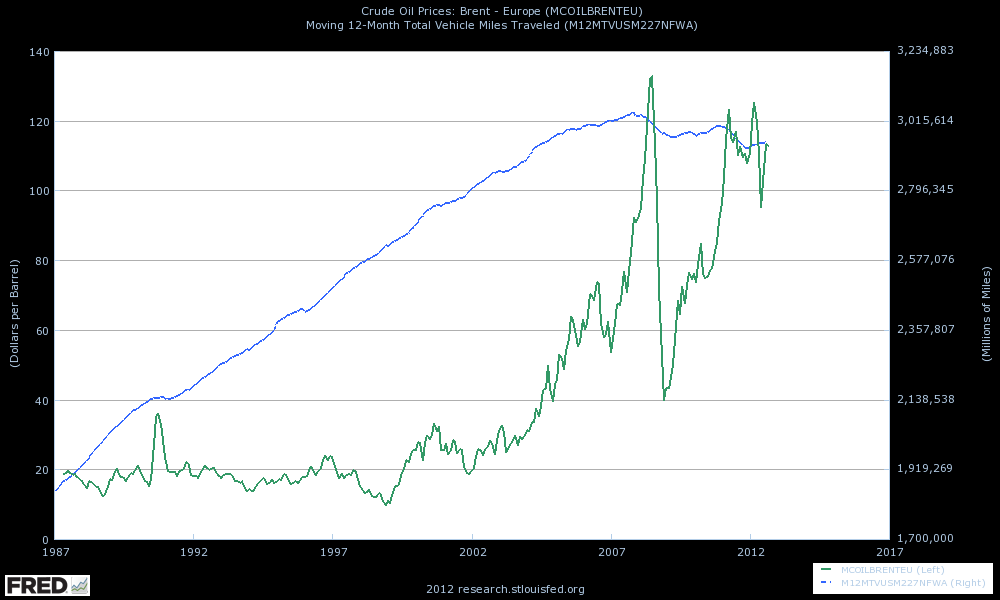
1987-2012
Filed under: Uncategorized | Tags: China, CNOOC, energy independence, energy security, Nexen, peak oil, tar sands
BEIJING- The chairman of China’s CNOOC Ltd. said Friday that he was confident that the state-controlled oil giant’s proposed $15.1 billion buyout of Canada’s Nexen Inc. would be completed by the end of the year.
via RIGZONE – CNOOC Chairman: Confident Nexen Deal Will Be Completed by Year-End.
Filed under: Uncategorized | Tags: bonobos, Fake debate, Obomney, oil, open the spigots, peak oil, Robama, theater of the absurd
From the official transcript of last night’s town hall-style debate.
R: President Obama’s policies have strangled oil production in this country! When I’m President I will OPEN THE FREAKING SPIGOTS.
O: The opening of spigots is an idea we developed in my administration, Governor. We are going to produce and burn more oil than you ever thought possible, then we are going to burn some more. I guarantee it.
R: When I am President we will literally be swimming in oil, gas and coal.
O: Obama starts with O and that stands for OIL!!
R: Admit that you hate oil. Admit that you hate gas.
O: I LOVE OIL. I LOVE COAL. I LOVE GAS.
[Both men start jumping up and down, waving their arms like bonobos.]
R: I AM #!*$# CRAZY FOR OIL, GAS AND COAL!!
O: HiYEEEAARRRGGGHHH!! OOOOOIIILLLLLLL!!!
Filed under: Uncategorized | Tags: average mpg, cars, energy efficiency, fuel efficiency, gasoline consumption, mythology, oil consumption, peak oil, transportation, Vmt
via http://www.theoildrum.com/node/9542#more

The recent drop in oil consumption is not due to increases in fuel efficiency.
 Industrialized Cyclist Notepad