


Filed under: Uncategorized | Tags: bicycling, Copenhagen, cryogenics, Denmark, sperm, transportation
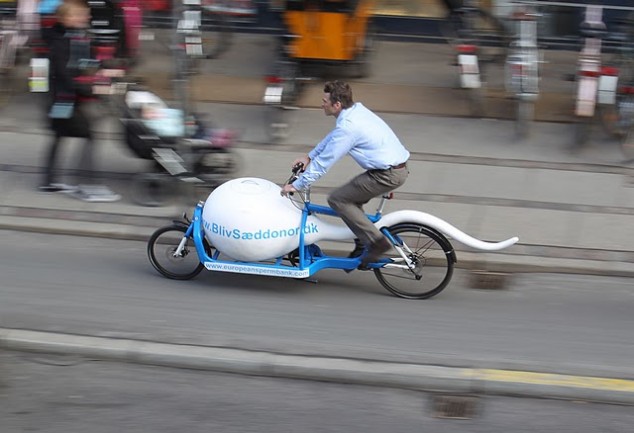
via 22 Words | Danish sperm bank transports samples by sperm-shaped bike..
by way of Copenhagenize.
Filed under: Uncategorized | Tags: energy, Peak Car, Peak Driving, Peak Motorization, peak oil, Sivak, transportation
It’s not about efficiency.
Has Motorization in the US Peaked? Part 2 — Sivak (pdf).

Filed under: maps | Tags: Indianapolis, Joan Hostetler, transportation, urban cycling, urban development, urban freeways
In Indianapolis and elsewhere. Here is a current map of some Indy freeways superimposed over a 1956 aerial photo.
 click to enlarge
Filed under: Uncategorized | Tags: energy, light vehicle sales, Peak Demand, peak oil, SAAR, transportation
via Calculated Risk:

Filed under: Uncategorized | Tags: carbon credits, climate change, electric cars, EV, Honda Fit EV, PEV, Tesla, transportation
Honda is not selling the Fit EV with gas under 4$/gal. Lowered their lease price by one third.
Under a complicated formula that varies by state, automakers earn “zero emission vehicle” credits for each electric vehicle they sell or lease, and they’re expected to rack up a certain number of credits each year. Not all green cars are equal: All-electric models such as the Fit EV are worth more credits than plug-in hybrid models with gasoline engines like the Volt. The number of credits the carmakers must earn rises each year, and the companies face fines for falling short. (They can buy credits from other companies, such as electric-only Tesla Motors (TSLA), that sell too few cars to be subject to regulation yet still earn credits which they are allowed to sell. Tesla made $85 million selling California and federal credits in the first quarter of 2013.)
via Why Honda's Unloading Electric Cars for Cheap – Businessweek.
Filed under: Uncategorized | Tags: battery, electric car, Elon Musk, EV, PEV, Tesla, transportation
For Tesla owners.
Tesla plans to install the battery-swap machinery at its network of charging stations. Each one costs about $500,000 and requires the company to dig a pit in the ground, which gets filled with the battery-swapping systems. Arms grab the battery pack, remove the liquid cooling systems, then place a new battery pack and screw it in with machines that measure every turn. Tesla customers will be charged $60 to $80 per battery-pack replacement and get automatically billed as their vehicle hits the station. “You don’t even have to step out of the car,” said Musk. Those who want to wait 30 minutes can still recharge for free at the charging stations and, of course, plug in at home or at stores.
via Gone in 90 Seconds: Tesla's Battery-Swapping Magic – Businessweek.
Filed under: Uncategorized | Tags: denver, metered parking, parking, photography, transportation
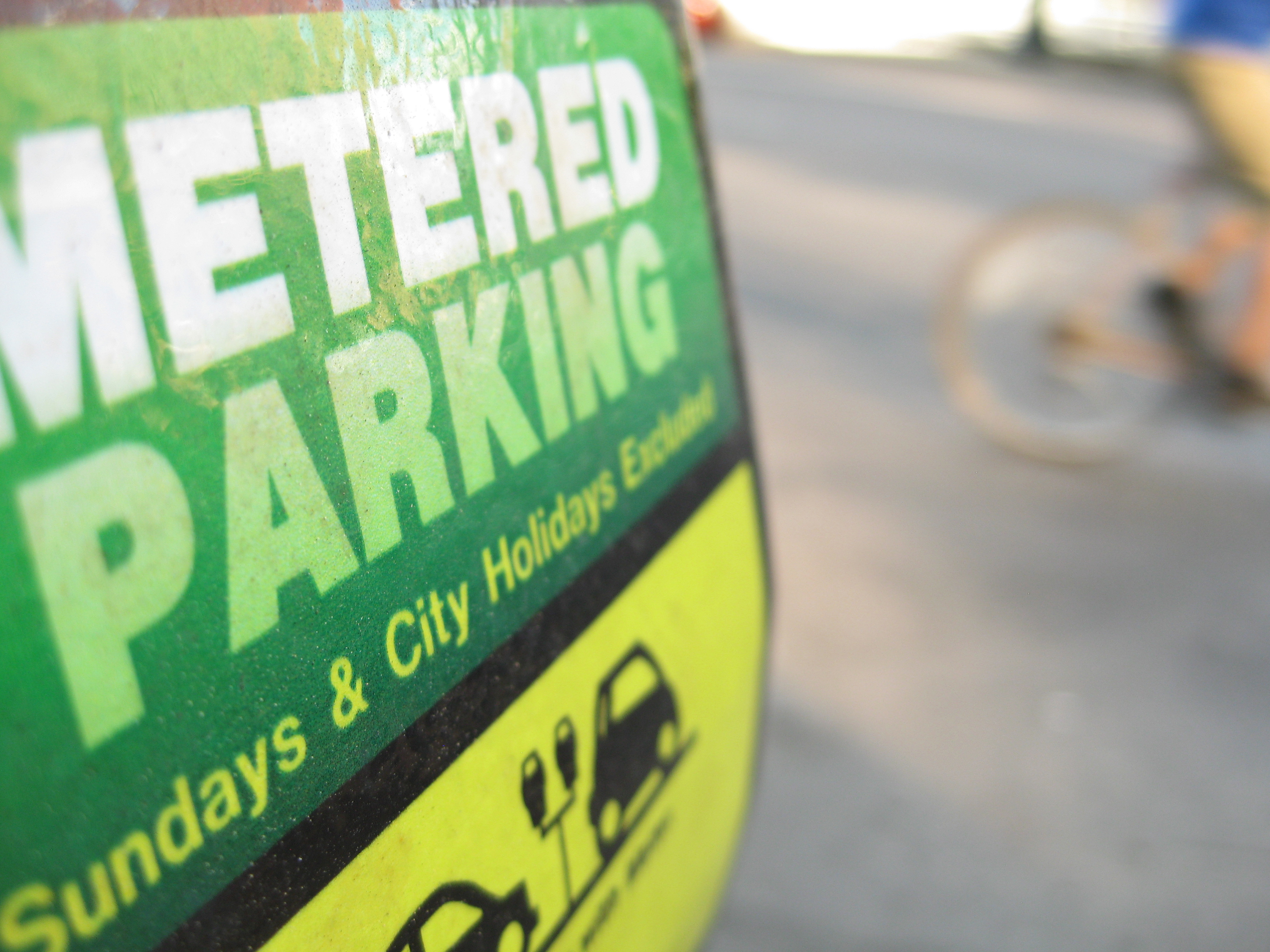
Just a photo.
Filed under: Uncategorized | Tags: bicycle parking, bicycling, bike parking, Choo, Eco Cycle, Giken, Japan, transportation, urban cycling
Via Danny Choo:

…construction company Giken have come up with a solution which stores hundreds of bicycles underground using a system called Eco Cycle – a robot system which stores bicycles underground in a 11 meter deep well.
via Japan Underground Bicycle Parking Systems.
Filed under: Uncategorized | Tags: bicycle, bicycling, bike rental, bike share, Citi, Citi Bike, Citibank, Citibike, end of the world, helmet, helmets, New York, New Yorker Magazine, NYC, slow rollout, stationary bicycle, transportation, urban cycling
Painfully slow rollout of NYC’s Citibike rental scheme is here, maybe. Lock up your daughters!
Interesting the artist put a helmet on the outside rider. Wonder if he/she was told to do that.
via http://publicbikeshare.com/2013/05/28/public-bike-share-a-picture-says-1000-words/

Filed under: Uncategorized | Tags: air cargo, air traffic, air travel, aviation, economic activity, economics, energy, jet fuel, peak oil, recession, transportation
Trending down.

Via Macronomics:
Macronomics: Air Traffic is pointing to additional economic activity weakness.
Filed under: Uncategorized | Tags: bicycles, concept bike, levitation bike, Special Area, transportation
This fellow took not thinking much about how and why bicycles work to a new level before he drew up this “concept bike.”
Just looking at the “custom saddle” makes my Special Area hurt.

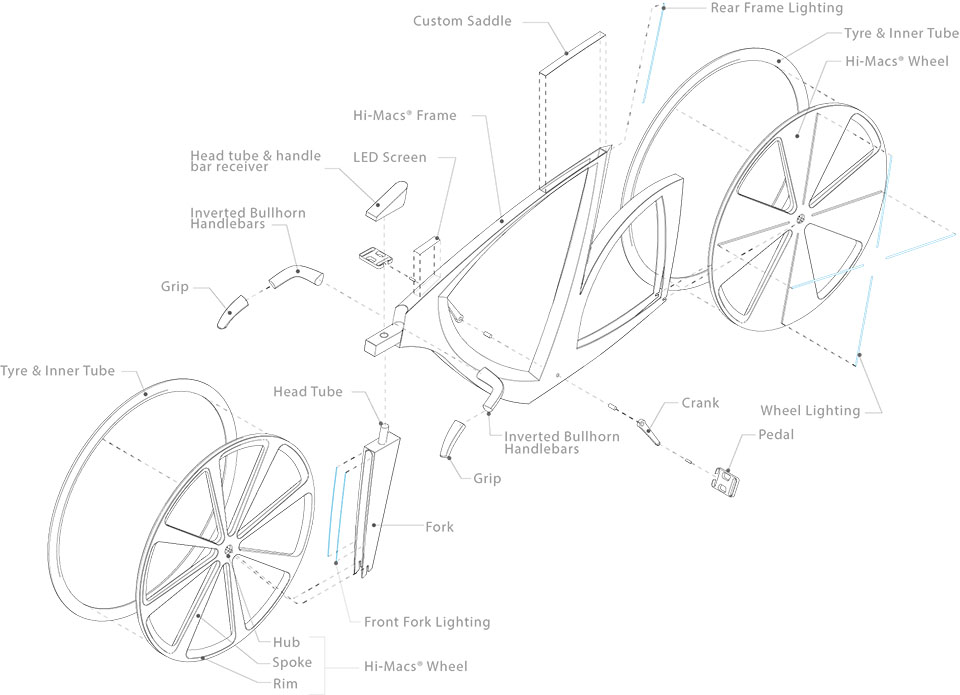
click to enlarge
Filed under: Uncategorized | Tags: BP, energy, Esso, Jamaica, Jamaica Aircraft Refuelling Services, jet fuel, Montego Bay, Petrojam, Sangster International Airport, St. James, Total, transportation
Earlier this week.
Highly placed police sources have confirmed that more than 200,000 litres of jet fuel has been stolen from the Sangster International Airport in Montego Bay, St James.
The fuel, valued at $20 million, is owned by a consortium, including Jamaica Aircraft Refuelling Services (partnership between PetroJam and British Petroleum), Esso and Total.
Filed under: Uncategorized | Tags: bicycling, bike-friendly states, cycling, cycling infrastructure, green transportation, LAB, LAW, League of American Bicyclists, League of American Wheelmen, transportation, transportation policy, urban cycling

via League of American Bicyclists (pdf): http://bicyclecolo.org/merchant/117/files/2013BFSrankingchart.pdf
Filed under: Uncategorized | Tags: energy, gas-electric, hev, hybrid, oil consumption, phev, Prius, transportation
Unimpressed with their cars’ performance and m.p.g. for the money. Still, hybrids are gaining popularity overall.
According to industry reports, only about one in three hybrid owners buy another gas-electric model when they trade in.
via Hybrid sales increase, but some eco-drivers are disappointed – Business on NBCNews.com.
Filed under: Uncategorized | Tags: energy, gasoline production, Peak Demand, peak oil, transportation, US oil consumption, vehicle miles traveled, VMT< DOT
No coherent explanation for the way the years are labeled across the bottom however.
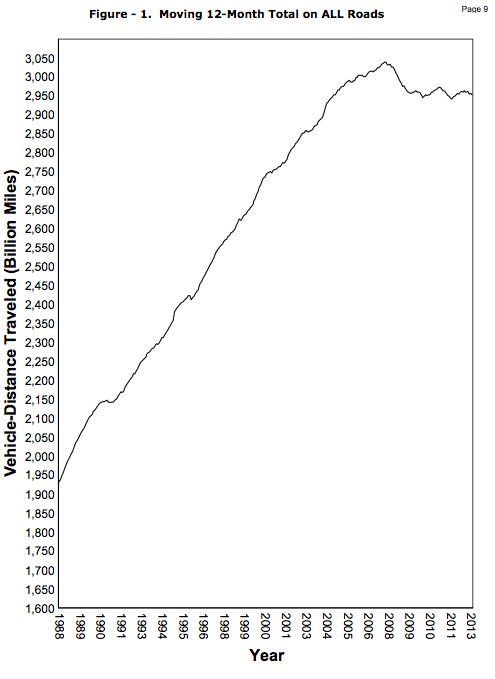
Data through February.
via (pdf) http://www.fhwa.dot.gov/policyinformation/travel_monitoring/13febtvt/13febtvt.pdf
Filed under: Uncategorized | Tags: california, car culture, FHA, Gloria, Hecox, mode share, National Household Travel Survey, patterns of use, San Diego, transportation, trip distance, vehicle trips, Vmt, Voice of San Diego
Saw this first at http://www.cyclelicio.us
The new definition of 40%.
The 2009 study [National Household Travel Survey] showed 40 percent of trips recorded by more than 300,000 participants were two miles or less.
The statistic incorporated all forms of transportation — cars, bicycles, subways and more, said Doug Hecox, a spokesman for the Federal Highway Administration.
[…]
If one simply focuses on car trips, the percentage of short trips increases significantly.
According to the research, 69.1 percent of trips were two miles or less, Hecox said.
via Driving When You Could Bike: Fact Check – Voice of San Diego: San Diego Fact Check.
Filed under: Uncategorized | Tags: carbon dioxide emissions, China, Chindia, climate, CO2, Econbrowser, James Hamilton, natural gas liquids, NGLs, oil consumption, Peak Demand, peak oil, total liquids, transportation

And it’s worth remembering why that happened– we didn’t have a choice. Global field production of crude oil (excluding natural gas liquids, which are not used as transportation fuel) stagnated at about 74 million barrels/day between 2005 and 2008. It is up a couple of million barrels since then, but more than 100% of this increase has been consumed by China alone, forcing the U.S. and other countries to reduce our oil consumption.
via James Hamilton: Econbrowser: Declining U.S. carbon dioxide emissions.
Filed under: Uncategorized | Tags: auto traffic, auto-pedestrian, bicycle, bicycling, bike, car-pedestrian, collisions, denver, Denver-Boulder, hit and run, traffic accidents, transportation, urban cycling
Denver’s traffic not following national trends.
Denver’s auto-pedestrian accidents were up 46 percent for the first eight weeks of 2013 over the previous two years. Another grim statistic also stands out: Last year, the city had 13 hit-and-run fatalities, more than the previous three years combined.
[…]
After two years of averaging about 31 auto-pedestrian incidents a month, the average jumped to 44 a month in January and February, according to Denver police statistics.
Hit-and-run cases averaged 8.5 a month in January and February — after 4.8 per month in 2011 and 6.1 in 2012.
[…]
Over the past decade, about 1,600 accidents involving pedestrians or cyclists were reported every year, according to a study by the Denver Regional Council of Governments.
In the 10-county region, 17 percent of all fatalities were pedestrians, and 3 percent were cyclists.
via Spike in Denver's auto-pedestrian cases has officials seeking answers – The Denver Post.
These “jumps” are based on a mere two months’ of accidents. Gotta keep an eye out to see if it continues.
Filed under: Uncategorized | Tags: bicycle helmet laws, bicycle injuries, bicycle safety, bicycling injuries, Bike accidents, bike helmets, child cyclists, children and cycling, cycling, cycling injuries, helmet laws, helmets, mandatory helmet laws, transportation, urban cycling
Pinka Chatterji and Sara Markowitz, “Effects of Bicycle Helmet Laws on Children’s Injuries.” NBER Working Paper No. 18773. February 2013. JEL No. I0,K0
ABSTRACT
Cycling is popular among children, but results in thousands of injuries annually. In recent years, many states and localities have enacted bicycle helmet laws. We examine direct and indirect effects of these laws on injuries. Using hospital-level panel data and triple difference models, we find helmet laws are associated with reductions in bicycle-related head injuries among children. However, laws also are associated with decreases in non-head cycling injuries, as well as increases in head injuries from other wheeled sports. Thus, the observed reduction in bicycle-related head injuries may be due to reductions in bicycle riding induced by the laws.Pinka Chatterji
State University of New York at Albany Economics DepartmentSara Markowitz
Department of Economics Emory University
The auto industry loves mandatory helmet laws.
Filed under: Uncategorized | Tags: 2013 oil price, Brent, crack spread, crude oil, EIA, energy, gas prices, oil price predictions, refinery profits, transportation, WTI
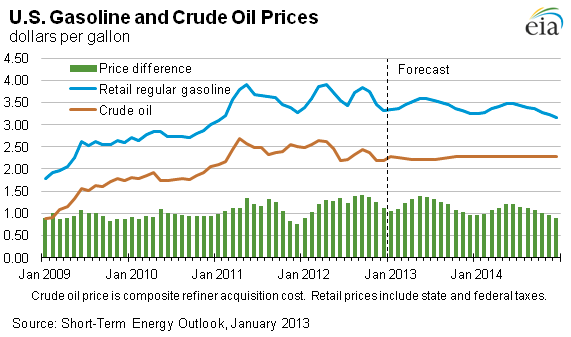
Always kind of funny. Flat-line forever.
 Industrialized Cyclist Notepad